


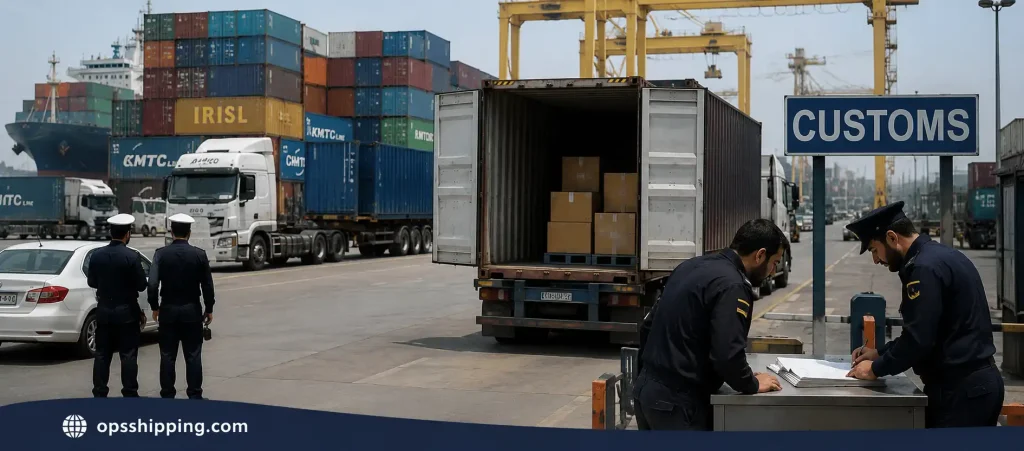
Customs clearance is the legal and administrative process through which imported or exported goods are declared, reviewed, assessed, and eventually released by customs. In simple terms, the arrival of a shipment at a port, border, or customs facility does not automatically mean that the importer can take possession of the goods. The shipment must first complete the required customs formalities and receive authorization for release.
Depending on the type of cargo, customs procedure, origin and destination, and applicable regulations, the process may involve reviewing commercial and shipping documents, determining the appropriate HS Code, checking the customs value, obtaining required permits, submitting a customs declaration, inspecting the cargo when necessary, and paying applicable duties and charges.
For importers, customs clearance should not be considered merely an administrative step that begins after the cargo arrives. Proper planning should start before the shipment leaves the country of origin. Errors in documentation, product classification, customs value, or required permits can result in additional inspections, unexpected costs, and delays in receiving the cargo.
For shipments arriving from China, for example, coordination between the supplier, freight forwarder, importer, shipping documents, and customs clearance process can have a significant impact on the overall efficiency of the import operation.
What Is Customs Clearance?
Customs clearance is the process through which goods entering or leaving a country are formally declared to customs and undergo the necessary legal and administrative procedures before they can be released or exported.
During this process, information about the shipment must correspond with the relevant commercial and transportation documents. Details such as the description of the goods, quantity, weight, value, country of origin, and other shipment information need to be accurate and consistent.
For this reason, customs clearance is much more than simply paying customs duties. Accurate declaration, tariff classification, document submission, permit verification, customs assessment, payment of applicable charges, and cargo release can all be part of the process.
When Does Customs Clearance Take Place?
Customs clearance generally takes place after the shipment arrives at the relevant customs facility and the necessary conditions for declaration and processing are available. However, preparation for customs clearance should ideally begin much earlier.
Before the goods are shipped, the importer should review the commercial documents, cargo specifications, potential import requirements, HS Code, and any permits that may be required.
This preparation is particularly important for products subject to specific regulatory requirements. Discovering after the cargo has arrived that a particular permit or certification is required can create unnecessary delays and additional costs.
In other words, successful customs clearance begins with import planning—not when the cargo reaches customs.
Customs clearance is one of the final stages of the import process. To understand the complete process from purchasing goods to transportation and customs procedures, read [Importing Goods from China to Iran: A Complete Guide].
What Are the Main Steps in Customs Clearance?
Although the exact procedure can vary depending on the cargo and customs regime, the customs clearance process can generally be understood through the following stages:
- Preparing and reviewing the required documents
- Arrival of the shipment at customs
- Registration and submission of the customs declaration
- Customs review and assessment
- Physical inspection when required
- Verification of tariff classification and customs value
- Obtaining required permits and approvals
- Payment of applicable duties and charges
- Obtaining cargo release authorization
- Final release and transportation of the goods from customs
Not every shipment follows exactly the same sequence or requires the same level of inspection. The process can vary depending on the type of goods, customs procedure, applicable regulations, and the circumstances of the shipment.

Step 1: Preparing Customs Clearance Documents
One of the most important parts of customs clearance is preparing the required documentation and ensuring that the information across different documents is consistent.
Depending on the shipment, documents may include:
- Commercial Invoice
- Packing List
- Bill of Lading
- Certificate of Origin
- Import permits
- Product certificates
- Other regulatory or technical documents
The importance of this stage is not simply having the documents available. The information contained in them should also accurately represent the actual shipment.
For example, if the product description, quantity, weight, or value differs significantly between the commercial invoice, packing list, and shipping documents, customs may require additional clarification or review.
For this reason, reviewing all documents before the shipment leaves the origin country can help prevent problems later in the clearance process.
What Documents Are Required for Customs Clearance?
The exact documents required depend on the type of goods, import procedure, and applicable regulations. However, several documents are commonly used in international trade.
Commercial Invoice
The Commercial Invoice contains important information about the transaction, including the seller, buyer, description of goods, quantity, value, currency, and applicable trade terms.
Packing List
The Packing List provides information about how the goods are packaged, including the number of packages, gross and net weight, dimensions, and packaging details.
Bill of Lading
The Bill of Lading is a transportation document containing information about the shipper, consignee, cargo, and transportation route.
For sea freight shipments, it is one of the key documents connecting the cargo with the transportation process.
Certificate of Origin
The Certificate of Origin identifies the country where the goods originate. Depending on the transaction and applicable regulations, it may be required during the customs process.
Permits and Certificates
Certain products may require additional permits, certifications, inspections, or approvals because of their nature or intended use.
Therefore, there is no single list of documents that applies to every shipment.
Step 2: Arrival of Goods at Customs
After the shipment arrives at the destination customs facility, the goods are placed in the appropriate customs-controlled area or warehouse and the necessary arrival and storage information is recorded.
For imported goods, documentation associated with the arrival and storage of the shipment becomes important during the following customs procedures.
In sea freight operations, coordination between the shipping company, freight forwarder, importer, customs representative, and warehouse is particularly important. Delays in transferring documents or coordinating the release process can affect the overall delivery time.

Step 3: Submitting the Customs Declaration
The customs declaration is one of the central parts of the clearance process. It contains information about the shipment, including the description of the goods, quantity, weight, value, origin, tariff classification, and other relevant details.
One of the most important elements of the declaration is the HS Code or tariff classification of the goods.
The HS Code is used internationally to classify products for customs and trade purposes. The correct classification can affect applicable requirements, duties, permits, and other aspects of the import process.
For this reason, the HS Code should not be selected simply by looking at the commercial name of a product. Its material, technical specifications, function, and actual use may all be relevant to the correct classification.
What Is an HS Code and Why Is It Important?
An HS Code, or Harmonized System Code, is an internationally standardized system used to classify goods in global trade.
Products are categorized according to their characteristics, composition, function, and other relevant factors. The classification can affect customs treatment, import requirements, and the calculation of applicable duties and charges.
Two products may appear similar but still fall under different tariff classifications because of differences in their material, function, technical specifications, or intended use.
Incorrect classification can result in discrepancies in the customs declaration and may lead to additional review, corrections, delays, or other complications.
For this reason, importers should determine the appropriate tariff classification before shipping the goods whenever possible.
Step 4: Customs Review and Assessment
After the customs declaration is submitted, the information provided is reviewed according to the applicable customs procedures.
Depending on the shipment and the assessment process, customs may review the documents only or require a physical examination of the goods.
The purpose of this review is to verify that the information declared by the importer corresponds with the actual shipment and supporting documents.
For importers, one of the most effective ways to reduce complications at this stage is to make sure that the declared information is accurate, complete, and properly supported by documentation.
Step 5: Physical Inspection of Goods
Depending on the customs procedure and assessment requirements, the shipment may undergo physical inspection.
During an inspection, customs authorities may compare the actual goods with the information provided in the declaration and supporting documents.
The type of goods, quantity, packaging, product specifications, and other relevant characteristics may be reviewed.
If there is a significant discrepancy between the declared information and the actual cargo, the shipment may require additional examination or clarification.
This is why maintaining accurate and consistent cargo information from the time of purchase through transportation and customs declaration is so important.
Step 6: Customs Value, Duties, and Charges
Another important part of customs clearance is determining the customs value and calculating the applicable duties, taxes, and other charges.
The final amount depends on several factors, including the type of goods, customs valuation, tariff classification, import procedure, and regulations applicable at the time of clearance.
Therefore, it is not possible to provide one fixed customs clearance cost for all products.
Two products with similar purchase prices may have different customs-related costs because of differences in tariff classification, product type, regulatory requirements, or other factors.
Importers should also avoid treating customs duties as the only cost associated with clearance. Depending on the shipment, additional costs may arise from warehousing, handling, inspection, inland transportation, and other operational services.
Customs-related expenses are only one part of the total cost of importing goods. To understand the full cost from purchasing the goods to transportation, customs clearance, and final delivery, read [What Is the Real Cost of Importing from China to Iran?].
What Are the Costs of Customs Clearance?
There is no fixed customs clearance cost that applies to every shipment. The final cost depends on the characteristics of the goods and the specific circumstances of the import.
Factors that may affect the total cost include:
- Product type
- Customs value
- HS Code
- Cargo weight and volume
- Import procedure
- Required permits
- Customs location
- Warehousing period
- Inspection and handling requirements
- Inland transportation
- Other logistics services
For this reason, importers should evaluate the total landed cost rather than focusing on a single customs-related charge.
This approach provides a more realistic picture of the actual cost of getting the goods from the supplier to the final destination.
Step 7: Payment and Cargo Release Authorization
After the customs review is completed and the applicable amounts have been determined, the required duties, taxes, and other charges are paid according to the relevant procedure.
Once the necessary requirements have been fulfilled and the customs process has been completed, the required authorization for cargo release can be issued.
At this stage, any unresolved documentation issue or discrepancy may still delay the release of the shipment. Therefore, document accuracy should be maintained throughout the entire process rather than being checked only at the end.
Step 8: Final Release of Goods from Customs
Once the required customs formalities have been completed and the release authorization has been obtained, the goods can leave the customs facility.
The shipment can then be transported to the importer’s warehouse, factory, distribution center, store, or another final destination.
For companies using Door-to-Door logistics services, transportation from the origin through international shipping and onward to the final destination can be coordinated as part of a broader logistics solution.
This can reduce the need for the importer to separately coordinate every stage of the transportation process.
What Causes Delays in Customs Clearance?
Customs clearance delays can occur for several reasons. One of the most common is incomplete or inconsistent documentation.
Differences in the description, quantity, weight, value, or other shipment information between different documents can lead to additional reviews or requests for clarification.
Another potential cause is the lack of required permits or certificates. Certain categories of goods may be subject to specific regulatory requirements, and discovering these requirements only after the shipment arrives can create significant delays.
Incorrect tariff classification, valuation issues, physical inspection, documentation problems, and extended storage can also affect the overall clearance time.
For importers, preventing a customs problem before the shipment arrives is usually more efficient than trying to resolve it after the cargo is already at customs.
Common Customs Clearance Mistakes Made by Importers
One of the most common mistakes is waiting until the cargo arrives before thinking about customs clearance.
Importers should ideally review the tariff classification, required permits, documentation, and potential customs costs before the goods are shipped.
Another common mistake is failing to maintain consistency between documents. For example, differences between the product description on the Commercial Invoice and the Packing List may create unnecessary complications.
Some importers also calculate their import cost using only the purchase price and international freight. However, customs duties, warehousing, handling, inland transportation, and other costs can affect the final landed cost.
Therefore, the actual cost of importing goods should be calculated as a complete logistics chain rather than as a simple purchase price plus freight calculation.
Customs Clearance for Imports from China
The customs clearance process for goods imported from China follows the general principles of import customs clearance, but careful preparation before the shipment leaves China is particularly important.
The Commercial Invoice, Packing List, Bill of Lading, and other relevant documents should accurately reflect the actual shipment.
Importers should also review the product classification, potential permits, customs requirements, and expected costs before the goods are shipped.
For sea freight shipments, coordination between the supplier, freight forwarder, shipping line, importer, and customs representative can have a significant impact on the overall efficiency of the process.

What Is the Role of a Customs Broker?
Customs clearance requires familiarity with customs procedures, documentation, tariff classification, and import requirements. For this reason, many importers work with a customs broker or specialized logistics company.
Depending on the agreement and scope of services, a customs broker may assist with document preparation, customs declaration, assessment procedures, permit coordination, customs follow-up, and cargo release.
For companies that import goods regularly, working with an experienced professional can help reduce administrative errors and make the clearance process easier to manage.
This can be particularly useful when the shipment involves technical products, special permits, unusual cargo characteristics, or complex customs requirements.
Is Customs Clearance the Same as Shipping?
No. Shipping and customs clearance are two different but closely connected processes.
Shipping refers to physically transporting the goods from the origin to the destination. For example, sea freight involves transporting cargo from China to Iran by vessel.
Customs clearance, on the other hand, refers to completing the legal and administrative procedures required to release the goods in the destination country.
A shipment can arrive at the destination on schedule and still remain at customs because of incomplete documentation, tariff classification issues, missing permits, or other clearance-related problems.
Therefore, a successful import operation requires transportation, documentation, customs clearance, and final delivery to be planned as connected parts of one supply chain.
International Shipping and Customs Clearance Services
For commercial importers, managing every stage of international logistics separately can be time-consuming and complicated.
OpsShipping provides international logistics solutions including sea freight, import, export, transit, and Door-to-Door transportation services across major trade routes involving China, Dubai, Turkey, India, and Russia.
The objective is not simply to move cargo from one country to another. Route planning, documentation coordination, international transportation, destination procedures, and final delivery can all influence the overall efficiency and cost of an import shipment.
For businesses importing commercial cargo, choosing an experienced logistics partner can help simplify coordination between the different stages of the supply chain.
FAQ
Customs clearance is the legal and administrative process through which imported or exported goods are declared, reviewed, assessed, and released by customs after the required procedures and payments have been completed.
The main steps generally include document preparation, cargo arrival, customs declaration, document and cargo assessment, tariff and value review, payment of applicable charges, obtaining release authorization, and final cargo release.
Depending on the type of goods and import procedure, documents may include a Commercial Invoice, Packing List, Bill of Lading, Certificate of Origin, permits, certificates, and other supporting documents.
An HS Code is an internationally standardized classification system used to categorize goods in international trade. Correct classification can affect customs requirements and applicable duties.
No. Requirements depend on the type and nature of the goods and the regulations applicable to them. Some products may require specific permits or certifications.
Incomplete or inconsistent documentation, incorrect tariff classification, valuation issues, missing permits, physical inspection, and other administrative or operational issues can contribute to delays.
Yes. Importers may use a customs broker or specialized logistics company to assist with customs procedures. The exact scope of responsibility should be clearly defined in the service agreement.
Conclusion
Customs clearance is one of the most important stages of international trade and import operations. It is not limited to paying customs duties; it can involve document preparation, customs declaration, tariff classification, cargo assessment, permit verification, payment of applicable charges, and final cargo release.
Proper preparation before the shipment arrives at customs can significantly reduce the risk of unexpected delays and additional costs. Reviewing the HS Code, required documents, applicable permits, cargo specifications, and estimated costs before shipment can help importers manage the process more efficiently.
For goods imported from China, coordination between the supplier, freight forwarder, shipping documents, international transportation, and customs clearance is particularly important.
The more effectively these stages are coordinated, the easier it becomes to manage the shipment from the supplier to the final destination.
Plan Your International Shipment with Confidence
Successful customs clearance starts before the cargo reaches customs.
If you are planning to import goods from China, Dubai, Turkey, India, or Russia, you can share your shipment details with the OpsShipping team to evaluate the appropriate transportation and logistics solution for your cargo.
From international transportation and cargo coordination to Door-to-Door logistics, the right planning can help you manage your shipment more efficiently and reduce unnecessary complications.
Contact OpsShipping to discuss your cargo and find the most suitable logistics solution for your shipment.