


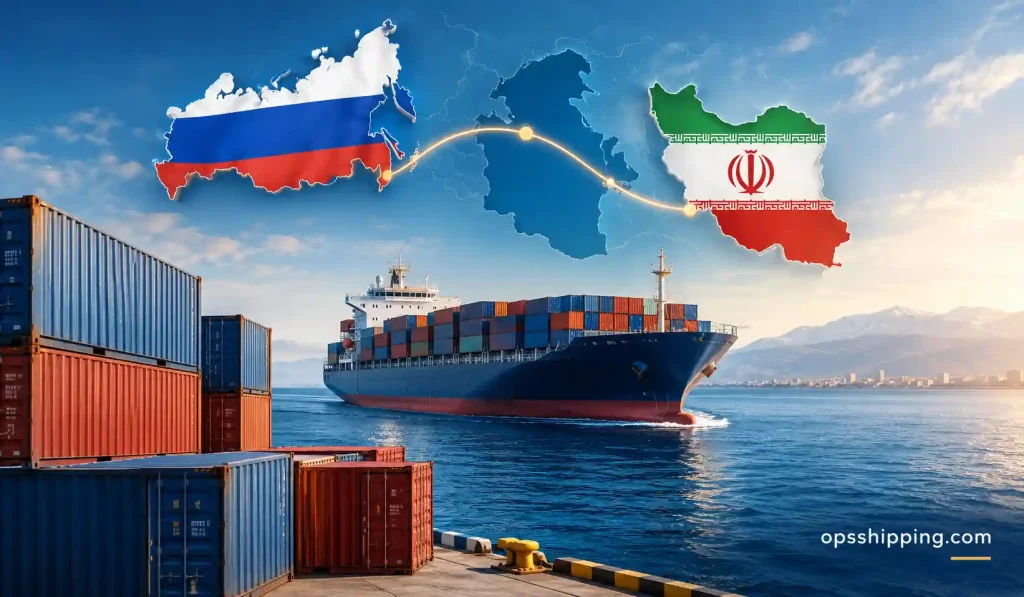
How Is Shipping Goods from Russia to Iran Done?
Russia is an important trading partner for Iran, and a wide range of goods are imported from the country. Due to Russia’s geographical position and the availability of different transportation routes, shipping goods from Russia to Iran can be carried out through several methods.
The right transportation method depends on factors such as the type and volume of the cargo, the origin in Russia, the final destination in Iran, the required delivery time, and the available budget.
For some shipments, sea freight through the Caspian Sea can be an appropriate option, while land transportation or multimodal shipping may offer greater flexibility or faster delivery for other types of cargo.
In this guide, we explore the main transportation methods, common routes, shipping costs, transit times, required documents, and important customs considerations for shipping goods from Russia to Iran.
Methods of Shipping Goods from Russia to Iran
Goods can generally be transported from Russia to Iran through three main methods:
- Sea freight
- Land transportation
- Multimodal transportation
Each method has its own advantages and limitations and should be selected according to the characteristics of the shipment.
1. Sea Freight from Russia to Iran
Sea freight is one of the important transportation methods between Russia and Iran. In this method, cargo can be transported from Russian ports on the Caspian Sea to northern Iranian ports, particularly the Port of Anzali and Amirabad Port.
Sea transportation can be a suitable choice for large and heavy shipments that do not require extremely fast delivery. Containerized shipping can also provide better cargo protection and more organized handling throughout the transportation process.
Choosing the right container is an important part of protecting goods during international transportation. If you want to learn more about the different container types and their specific applications, take a look at our complete guide to [types of sea freight containers].
2. Land Transportation from Russia to Iran
Land transportation is another important option for moving goods from Russia to Iran. It can be particularly useful for shipments that require a relatively faster delivery time or need to reach destinations beyond Iran’s northern ports.
The appropriate route depends on the cargo’s origin, final destination, border conditions, and available transit routes. The type of truck and transportation equipment can also affect the overall cost and transit time.
One of the main advantages of land transportation is the ability to deliver cargo directly to different destinations in Iran without relying entirely on the location of a seaport.
3. Multimodal Transportation from Russia to Iran
For some shipments, using only one transportation method may not be the most efficient solution. In such cases, multimodal transportation can combine two or more methods to create a more efficient route.
For example, part of the journey may be completed by sea, followed by land transportation to the final destination in Iran. This approach can help importers balance transportation costs, delivery time, and route flexibility.
If you are considering combining different transportation methods, understanding how [combined sea and land freight] works can help you choose a more efficient solution for your shipment.
Common Shipping Routes from Russia to Iran
The most suitable route depends on the location of the cargo in Russia and its final destination in Iran.
For sea freight, Russian ports along the Caspian Sea play an important role in trade with Iran. Cargo can then enter Iran through northern ports before continuing to its final destination.
For land transportation, different transit routes through the Caucasus region may be considered depending on current transportation conditions, border procedures, cargo specifications, and the final destination.
Therefore, selecting a shipping route should involve more than simply comparing distances. Factors such as transportation costs, transit time, border procedures, cargo type, and customs requirements should all be considered.

How Much Does It Cost to Ship Goods from Russia to Iran?
There is no fixed price for shipping goods from Russia to Iran. The final cost is calculated based on the specific characteristics of each shipment.
Some of the most important factors affecting shipping costs include:
- The cargo’s origin in Russia
- The final destination in Iran
- Cargo weight and volume
- Type of goods
- Packaging method
- Transportation method
- Container or vehicle type
- Port and terminal charges
- Customs and clearance costs
- Cargo insurance
- Shipping rates and market conditions at the time of transportation
For this reason, an accurate quotation requires detailed information about the shipment and the desired route.
How Long Does Shipping from Russia to Iran Take?
Transit time is not fixed and can vary depending on several factors, including the transportation method, origin, destination, selected route, border conditions, and customs procedures.
Sea freight is generally more suitable for shipments where cost efficiency is more important than speed, while land transportation or multimodal solutions may be preferable for time-sensitive cargo.
It is also important to remember that the actual delivery time includes more than the time spent in transit. Loading, unloading, customs procedures, inspections, and cargo clearance can all affect the final delivery schedule.
Documents Required for Shipping and Importing Goods from Russia
The required documents depend on the type of cargo, transportation method, and terms of the commercial transaction. However, a typical shipment may require documents such as:
- Commercial Invoice
- Packing List
- Transportation documents
- Certificate of Origin
- Insurance documents, when applicable
- Required permits for specific goods
- Import registration and related documents
- Documents required for customs clearance
Preparing and reviewing documentation before shipment can help prevent unnecessary delays and additional costs.
Customs Clearance for Goods from Russia in Iran
Once the shipment arrives in Iran, the goods must go through the relevant customs procedures before being released.
During the clearance process, information about the goods, commercial documents, customs value, tariff classification, and any required permits may be reviewed.
The type of goods is particularly important because certain products may require specialized permits, inspections, or additional documentation.

How to Choose the Best Shipping Method from Russia to Iran
Choosing the right transportation method should not be based solely on the initial freight price. Delivery time, total logistics costs, cargo characteristics, route reliability, and potential risks should also be considered.
For large shipments
Sea freight may be a cost-effective option, particularly when the shipment is not highly time-sensitive.
For time-sensitive cargo
Land transportation or a multimodal solution may provide a more suitable balance between speed and cost.
For sensitive or valuable goods
Packaging, cargo handling, insurance, and transportation conditions become especially important.
For smaller shipments
If the cargo does not require a full container, LCL shipping may be more economical than booking an entire container.
Not sure whether FCL or LCL is the better choice for your shipment? Our guide to the [difference between FCL and LCL] explains how these two options compare in terms of cost, capacity, and usage.
Important Tips Before Shipping Goods from Russia to Iran
Before arranging transportation, it is recommended to determine the following information accurately:
- Exact cargo origin in Russia
- Final destination in Iran
- Type and nature of the goods
- Cargo weight and volume
- Number of packages
- Packaging type
- Approximate cargo value
- Preferred transportation method
- Delivery terms
- Required documents and permits
Providing this information allows the freight provider to evaluate the available routes and offer a more accurate estimate of transportation costs and transit time.
Conclusion
Shipping goods from Russia to Iran can be carried out through sea, land, or multimodal transportation. The most suitable option depends on factors such as cargo type and volume, origin and destination, required delivery time, route conditions, and overall logistics budget.
Sea freight through the Caspian Sea can be a practical option for many large shipments, while land and multimodal transportation may provide greater flexibility or faster delivery for certain cargo.
To avoid unnecessary costs and delays, it is important to evaluate the shipping route, documentation, insurance, customs requirements, and clearance process before the cargo is dispatched.
If you need assistance with route selection, freight costs, or planning the transportation of goods from Russia to Iran, the specialists at Ops Shipping can evaluate your shipment details and help determine a suitable transportation solution.
FAQ
Goods can generally be shipped from Russia to Iran by sea, land, or through multimodal transportation. The best option depends on the cargo type, volume, origin, destination, budget, and required delivery time.
Sea freight generally operates through the Caspian Sea, connecting Russian ports with northern Iranian ports such as Anzali and Amirabad.
Shipping costs depend on factors such as cargo weight and volume, origin and destination, transportation method, container type, port charges, and customs-related costs. An exact quotation requires the shipment details.
Transit time varies depending on the transportation method, route, origin, destination, border conditions, and customs procedures. Sea, land, and multimodal transportation each have different transit times.
Yes. For shipments that do not require a full container, LCL or less-than-container-load shipping can be considered as an alternative to booking an entire container.
Depending on the cargo and transportation method, documents such as a Commercial Invoice, Packing List, transportation documents, Certificate of Origin, insurance documents, and required import permits may be needed.
Yes. Cargo arriving through northern ports or other entry points can continue by domestic transportation to different cities across Iran. The appropriate inland transportation method depends on the cargo and final destination.
There is no single method that is suitable for every shipment. Sea freight may be suitable for large, non-urgent cargo, while land or multimodal transportation may be preferable when delivery time or route flexibility is more important.