


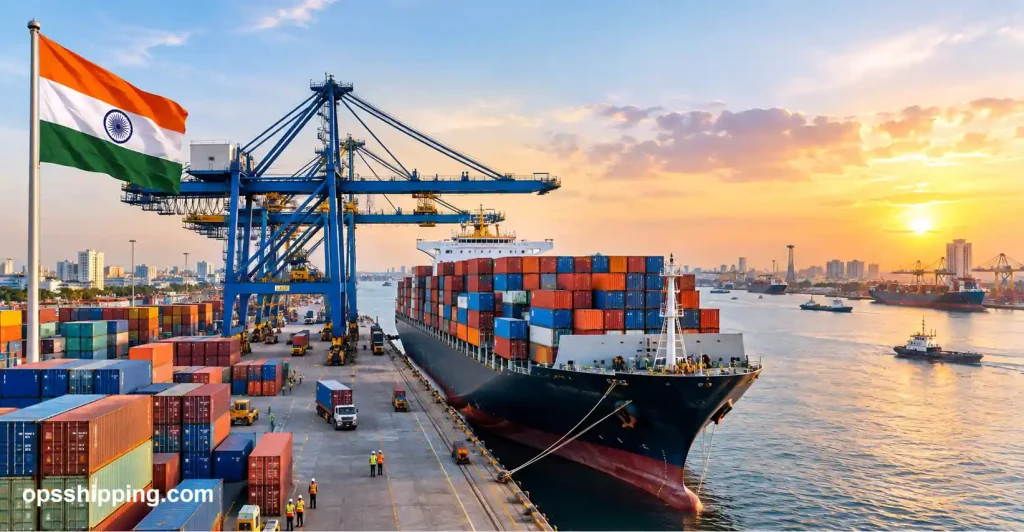
Importing goods from India to Iran is an important international trade route for sourcing products, raw materials, and various types of goods. Due to its large production capacity, wide range of products, specialized industries, and extensive international trade network, India can be an important sourcing market for Iranian importers and businesses.
However, importing from India involves much more than simply purchasing goods and transporting them to Iran. Choosing a reliable supplier, checking product quality, selecting the right shipping method, preparing documents, understanding import regulations, completing customs procedures, and managing shipping and clearance costs all play an important role in the success of an import transaction.
In this guide, we examine the process of importing goods from India to Iran, from selecting a product and supplier to shipping, arrival in Iran, and customs clearance.
What Is Importing from India and Why Is It Important?
Importing from India means purchasing goods, raw materials, or other products from Indian suppliers and transporting them to Iran through international transportation routes.
India is one of Asia’s major economies and an important production hub for industries such as pharmaceuticals, chemicals, agricultural products, textiles, industrial components, raw materials, and various consumer goods.
For an Iranian importer, India’s advantage is not limited to product prices. A wide supplier base, large production capacity, and access to specialized products can also make India an attractive sourcing market.
However, a lower purchase price does not necessarily mean that an import transaction will be economically viable. Shipping costs, insurance, customs duties and taxes, clearance expenses, and other related costs should all be considered alongside the purchase price.
What Goods Can Be Imported from India?
The types of goods that can be imported from India depend on Iran’s import regulations, product characteristics, required permits, and whether the goods are legally eligible for import.
Some product categories commonly considered in India-Iran trade include:
- Industrial raw materials
- Chemicals
- Pharmaceutical products and raw materials
- Spices and agricultural products
- Tea and certain food products
- Textiles and textile products
- Industrial machinery and equipment
- Petrochemical products and related raw materials
- Certain mineral products
- Components and supplies used in different industries
Before purchasing any product, its HS Code, import eligibility, required permits, and applicable customs duties should be checked.
Therefore, before finalizing a transaction, importers should not make decisions based solely on the product price. The full cost structure and import requirements should also be evaluated.

What Are the Steps for Importing from India to Iran?
The import process from India can be divided into several major stages. The exact sequence may vary depending on the type of goods, transaction terms, and applicable regulations, but the general process includes the following steps:
1. Select the Product and Analyze the Iranian Market
The first step is determining which product you intend to import.
At this stage, you should evaluate market demand in Iran, selling prices, local competitors, import costs, expected profit margins, and potential risks associated with the product.
A product may have a low purchase price in India, but if shipping, customs, and other costs significantly increase its landed cost, importing it may no longer be economically viable.
2. Find a Reliable Supplier in India
After selecting the product, the next step is finding a suitable supplier.
For commercial purchases, it is advisable to evaluate the supplier’s company background, production capacity, technical specifications, product quality, payment terms, and export history.
Before making the main payment, product specifications, quantity, packaging, standards, and delivery terms should also be clearly defined in the contract or commercial documents.
Important note:
A lower price does not always mean a better supplier. Poor quality or a mismatch between the delivered goods and the ordered specifications can create costs far greater than the initial price difference.
3. Obtain a Proforma Invoice and Review the Transaction Terms
After selecting the supplier, the transaction details are generally documented in a Proforma Invoice.
A Proforma Invoice may include:
- Seller and buyer information
- Product description
- Quantity
- Unit price
- Total price
- Packaging type
- Weight and volume
- Payment terms
- Delivery terms
- Country of origin
- Proforma Invoice validity period
At this stage, the information in the Proforma Invoice should be checked against the actual product specifications and Iran’s import requirements.
4. Check the HS Code and Import Requirements
One of the most important steps before finalizing a purchase is determining the product’s HS Code.
The HS Code is an international classification system used to identify goods in international trade. It plays an important role in determining customs tariffs and identifying certain import requirements.
An incorrect tariff classification can lead to issues such as differences in customs valuation, changes in applicable duties, additional licensing requirements, or delays during customs clearance.
For this reason, the HS Code should be verified before the goods are purchased and shipped.
5. Complete Import Registration and Commercial Procedures
Once the product and transaction terms have been determined, the importer must complete the relevant import registration and commercial procedures.
The type of product, shipment value, import conditions, and current regulations can affect the required documents and procedures.
Therefore, before the goods leave India, the importer should make sure that the shipment is legally eligible for entry into Iran.
6. Choose the Shipping Method from India to Iran
After finalizing the purchase, the appropriate transportation method should be selected.
Depending on the shipment, sea freight, air freight, or combined transportation routes may be considered.
The appropriate shipping method depends on factors such as:
- Weight and volume
- Cargo value
- Delivery urgency
- Type of goods
- Shipping cost
- Origin and destination
- Transit possibilities
- Port and route conditions
For large commercial shipments that are not highly time-sensitive, sea freight is generally one of the main options to consider.
Learn about the factors that affect shipping time and the differences in transit times across various routes, so you can better predict when your shipment will arrive. [Shipping Time from China to Iran]
Sea Freight from India to Iran
For large and bulky shipments, sea freight can be an economical option when calculated on a per-unit or per-volume basis.
Under this method, goods are shipped from an Indian port toward the appropriate destination port or transit route. Once the shipment enters the Iranian customs process, the required customs clearance procedures are completed.
The type of container should also be selected according to the characteristics of the cargo. General cargo is usually transported in standard containers, while specialized goods may require specialized equipment or container types.
Containers differ in more than just size; each type is designed to transport specific types of cargo. If you want to know which container is best suited for your shipment, read the article [Types of Sea Freight Containers].
FCL or LCL: Which Is Better for Imports from India?
When shipping by sea, choosing between FCL and LCL depends mainly on the volume and characteristics of the shipment.
With FCL, an entire container is dedicated to one shipment. This option can be suitable for larger shipments or cargo that requires greater control over the transportation process.
With LCL, goods from several shippers are consolidated into one container, and the container-related costs are shared among multiple shipments.
If the shipment is not large enough to justify a full container, LCL may be an option worth considering.
Choosing between Full Container Load and Less than Container Load can have a significant impact on shipping costs, transit time, and the way your goods are transported. If you want to understand [the difference between FCL and LCL] and determine which option is best suited for your shipment, read this article.
7. Prepare the Required Import Documents
One of the most important parts of importing from India is properly preparing commercial and shipping documents.
Depending on the type of goods and transaction, documents may include:
- Proforma Invoice
- Commercial Invoice
- Packing List
- Bill of Lading
- Certificate of Origin
- Import registration documents
- Required licenses and permits
- Insurance documents, where applicable
- Other documents related to the specific product
Consistency between documents is extremely important. For example, product descriptions, quantities, weights, values, and seller information should not differ between documents without a valid reason.
8. Ship the Goods from India
Once the required procedures have been completed, the goods are prepared for shipment according to the agreed terms.
At this stage, information related to packaging, weight, number of packages, cargo dimensions, and shipping documents should be carefully checked.
Before the shipment departs, it is also advisable to compare the Bill of Lading and other shipping documents with the commercial information of the transaction.
Any inconsistency can potentially cause problems or delays during subsequent stages.
9. Arrival in Iran and Customs Procedures
Once the goods arrive in Iran, the shipment enters the customs process.
At this stage, the documents and cargo information are reviewed, and the required procedures related to declaration, inspection, payment of applicable charges, and customs clearance are completed.
Customs clearance is an important part of the import chain. Errors involving documents, tariff classification, customs valuation, or permits can increase both clearance time and costs.
How Much Does It Cost to Import Goods from India to Iran?
There is no single fixed price for importing goods from India because the final cost depends on the type of product, weight and volume, shipment value, shipping method, customs tariff, transaction terms, and other factors.
In general, the total import cost may include:
- Purchase price of the goods
- Inland transportation in India
- Loading and handling charges
- International shipping costs
- Insurance, where applicable
- Customs duties and taxes
- Applicable legal charges
- Warehousing costs
- Loading and unloading charges
- Inspection or licensing costs
- Customs clearance fees
- Inland transportation in Iran
Therefore, when calculating the profitability of an import transaction, the importer should calculate the landed cost of the goods in Iran, rather than considering only the purchase price.

What Factors Affect the Cost of Importing from India?
Several important factors can change the final import cost.
Cargo Volume and Weight: As the shipment becomes larger or heavier, the cost structure of transportation changes. Therefore, accurate cargo specifications should be determined before selecting the shipping method.
Type of Goods: Different products have different tariffs and import requirements. Some goods may also require specific permits, certifications, or specialized inspections.
Shipping Method: Sea freight, air freight, and combined transportation have different cost and time structures. The appropriate method should be selected based on cargo value, urgency, and volume.
Port and Transportation Route: The origin port, destination port, transit route, and number of handling stages can all affect the final cost.
Customs Costs: Customs duties, taxes, and other applicable legal charges should be included in the landed-cost calculation before the transaction is finalized.
How Long Does It Take to Import Goods from India to Iran?
The import time from India is not fixed. It depends on the transportation route, shipping method, origin and destination ports, type of goods, transit conditions, document readiness, and customs clearance process.
For this reason, instead of promising a fixed delivery time, it is better to estimate an approximate timeframe based on the actual shipment specifications.
For sea freight, the importer should consider not only the vessel’s sailing time but also cargo preparation, inland transportation to the port, port operations, possible transit stages, and customs procedures.
Therefore, planning an import shipment based solely on sailing time can result in an inaccurate estimate of the actual delivery date.
What Is the Best Shipping Method for Goods from India to Iran?
There is no single shipping method that is best for every shipment.
If the cargo is relatively large and the delivery is not highly urgent, sea freight is usually worth considering.
If the shipment is small, high-value, or extremely time-sensitive, air freight may be a more suitable option.
Ultimately, the shipping method should be selected based on cost, time, volume, value, and cargo characteristics.
Making the right decision at this stage can have a significant impact on the landed cost and final profitability of the import transaction.
Major Challenges of Importing from India
Importing from India can create valuable commercial opportunities, but it also involves several challenges that should be considered before starting a transaction.
Finding a Reliable Supplier: One of the main risks is choosing a supplier that can consistently provide the required quality and specifications according to the agreement.
Differences Between Samples and Final Shipments: In some transactions, the initial sample may differ from the final shipment. For this reason, technical specifications and quality-control requirements should be clearly defined.
Documentation Problems: Errors in the Commercial Invoice, Packing List, Bill of Lading, or other documents can complicate the customs clearance process.
Changes in Shipping Costs: International shipping costs are not fixed and can change depending on market conditions, routes, and the type of service selected.
Incorrect Landed-Cost Calculation: A common mistake is calculating only the purchase price and shipping cost while ignoring customs duties, clearance fees, warehousing, and inland transportation.
How Can You Reduce the Risks of Importing from India?
To reduce import risks, several factors should be reviewed before finalizing the transaction:
- Check the supplier’s background and reputation.
- Clearly define the technical specifications of the goods.
- Inspect a product sample where possible.
- Verify the HS Code before finalizing the purchase.
- Determine the required permits before shipment.
- Estimate shipping and customs clearance costs before completing the transaction.
- Select the appropriate shipping method based on cargo volume and value.
- Check all documents for consistency.
- Consider suitable insurance coverage for the shipment.
- Plan the customs clearance process in advance.
The Role of Logistics Companies in Importing from India
International importing involves a series of interconnected stages, and coordination between purchasing, transportation, documentation, customs, and final delivery is essential.
A logistics and transportation company can assist with areas such as shipment planning, coordination with carriers, route selection, reviewing shipment information, and coordinating the movement of goods.
For shipments involving more complex or multi-stage routes, proper planning can help reduce unnecessary costs and delays.
For an importer, the objective is not simply to move goods from India to Iran. The goal is to deliver the shipment with controlled costs, appropriate timing, and minimum operational risk.
Important Points to Consider Before Importing from India
Before finalizing an import transaction, consider the following questions:
- Is the product legally eligible for import into Iran?
- What is the HS Code of the product?
- What are the applicable duties and taxes?
- Does the product require any special permits?
- What is the exact weight and volume of the shipment?
- Which shipping method is most suitable?
- What will the transportation cost to Iran be?
- How much will customs clearance and related costs be?
- What is the supplier’s track record?
- What are the payment terms?
- How will the commercial documents be issued?
- What will be the final landed cost of the goods in Iran?
Answering these questions before purchasing the goods can significantly reduce the financial and operational risks of importing.
Common Mistakes When Importing from India
Focusing Only on the Purchase Price: A product may be inexpensive in India, but after adding shipping, customs, clearance, and other expenses, it may no longer offer a price advantage.
Choosing a Supplier Based Solely on Price: A low price without checking product quality, supplier history, and sales terms can significantly increase transaction risk.
Ignoring the HS Code: Incorrect tariff classification can create problems during import procedures and customs clearance.
Choosing a Shipping Method Without Cost Analysis: The choice between FCL and LCL, as well as between sea and air freight, should be based on the actual characteristics of the shipment.
Inconsistent Documentation: The more accurate and consistent the information across commercial and shipping documents, the lower the likelihood of problems during later stages.
FAQ
It can be profitable for many types of goods, but profitability depends on the purchase price, product quality, shipping costs, customs tariffs, clearance expenses, and the selling price in Iran. Therefore, the landed cost should be calculated before purchasing.
There is no single product that can be considered the best option for every importer. Industrial raw materials, chemicals, certain agricultural products, textiles, and specialized goods may be worth considering depending on market conditions in Iran.
Yes. Sea freight is an important option for many commercial shipments. The appropriate method depends on the shipment’s weight, volume, value, and delivery requirements.
If the shipment is large enough to justify a full container, FCL may be suitable. For smaller shipments, LCL may be more economical. The final decision should be based on a comparison of the actual costs of both methods.
The cost depends on the product price, shipment volume and weight, shipping method, port and transportation charges, customs duties, clearance expenses, and other related costs. Without detailed shipment information, an exact figure cannot be provided.
The exact timeframe depends on the shipping method, route, origin and destination ports, transit conditions, document readiness, and customs clearance process. Delivery time should therefore be estimated based on the actual shipment and selected route.
Conclusion
Importing goods from India to Iran can provide valuable opportunities for sourcing products and raw materials, but its success depends on selecting the right product, choosing a reliable supplier, verifying the HS Code, preparing accurate documents, selecting an appropriate shipping method, and properly managing customs procedures.
When evaluating an import transaction, landed cost is more important than the initial purchase price. Importers should consider the cost of the goods, transportation, insurance, customs duties, clearance, warehousing, and inland delivery together before determining whether the transaction is economically viable.
If you are planning to import goods from India, it is advisable to evaluate the shipping route, transportation method, expected costs, and customs requirements before the shipment leaves the origin country.
Ops Shipping provides international transportation and logistics coordination services and can assist traders and commercial businesses with planning and managing the movement of goods from origin to destination.