


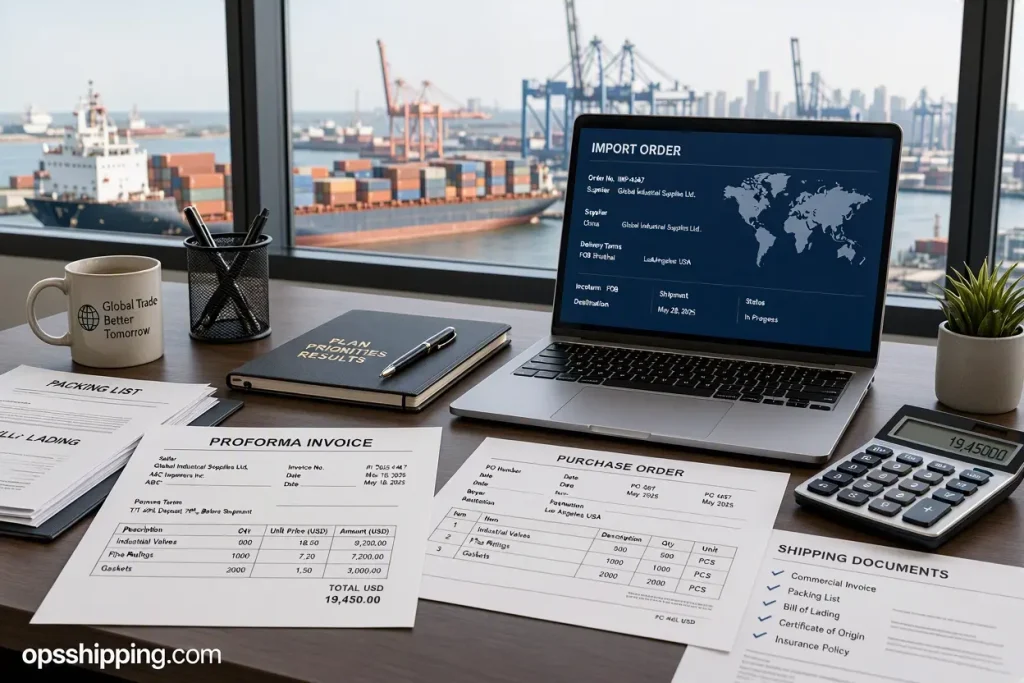
Goods order registration is one of the key steps in the import process. Before importing goods into Iran, businesses must review the applicable regulations, prepare the required commercial documents, and complete the relevant registration procedures. Proper planning helps importers reduce delays, avoid documentation errors, and manage the overall cost of importing goods.
In this guide, we explain what goods order registration means, how the process works, which documents are required, what costs to consider, and how importers can coordinate registration with international shipping and customs clearance.
Goods order registration is only one stage of the import process, and decisions regarding registration should be made in the context of the entire international trade transaction. Understanding the goods import process — from supplier selection and commercial document verification to international shipping and customs clearance — helps importers gain a clearer understanding of the transaction’s requirements and costs before making a purchase.
What Is Goods Order Registration?
Goods order registration is the administrative process of recording an intended import transaction with the relevant authorities in Iran. Depending on the product and the applicable regulations, the process may involve submitting commercial information, identifying the goods, providing supporting documents, and obtaining the necessary approvals.
Order registration should not be confused with customs clearance. Registration takes place as part of the import preparation process, while customs clearance involves the procedures required to release goods after they arrive at the customs office.
Understanding the broader goods import process helps importers coordinate supplier selection, documentation, international transportation, and customs procedures more effectively.
Why Is Goods Order Registration Important?
Completing the registration process correctly can help importers:
- Verify that the intended import complies with applicable requirements.
- Prepare the necessary commercial and product documentation.
- Identify potential licensing or approval requirements before shipment.
- Coordinate purchasing and shipping schedules more efficiently.
- Reduce the risk of delays caused by incomplete or inconsistent documents.
- Estimate import costs more accurately before committing to a transaction.
Requirements can vary depending on the type of goods, their country of origin, the importer’s circumstances, and regulations in force at the time of registration. Importers should verify the current requirements for their specific shipment before proceeding.
Steps for Goods Order Registration
Step 1: Identify the Goods and Check Import Requirements
The first step is to identify the product accurately and determine whether its import is permitted under the applicable regulations.
Important details may include:
- Product name and technical specifications
- Intended use
- Country of origin
- Quantity and unit of measurement
- Applicable tariff classification
- Required permits or product-specific approvals
Checking these details early can help prevent problems later in the registration and customs clearance processes.
Step 2: Obtain a Pro Forma Invoice from the Supplier
A pro forma invoice is a preliminary commercial document issued by the supplier. It usually contains information about the goods and the proposed transaction.
The document commonly includes:
- Buyer and seller details
- Product description and quantity
- Unit price and total transaction value
- Currency
- Proposed delivery terms
- Country of origin, where applicable
- Payment terms
- Shipping or delivery information
The importer should review the document carefully and make sure that the information is consistent with the intended transaction.
Delivery terms are particularly important because they determine how certain responsibilities and costs are allocated between the buyer and seller. Understanding the Incoterms rules and delivery terms can help importers assess transportation, insurance, and delivery obligations.
Step 3: Prepare the Required Documents
The documents required for order registration depend on the goods, the transaction, and the applicable rules. Commonly relevant documents may include:
- Pro forma invoice
- Importer registration or business information
- Product specifications and technical documents
- Product-specific permits or approvals, where required
- Information about the supplier and country of origin
- Additional documents requested by the relevant authority
Not every shipment requires the same documents. Importers should confirm the current checklist for their product category instead of relying on a generic list.
Step 4: Submit the Registration Information
The importer or authorized representative submits the required transaction information through the applicable official system and follows the relevant review procedure.
Before submission, verify that:
- The product description matches the commercial documents.
- Quantities and values are consistent.
- Supplier information is accurate.
- Required supporting documents are complete.
- Product-specific permits have been identified.
- The proposed transaction complies with the current requirements.
Errors or inconsistencies may result in requests for corrections or additional documentation.
Step 5: Determine the HS Code and Product Classification
The Harmonized System (HS) code is used to classify goods for customs and trade purposes. Correct classification is important because it may affect applicable duties, import restrictions, licensing requirements, and customs procedures.
The classification should be based on the product’s actual characteristics, composition, function, and relevant tariff rules. Do not select an HS code based solely on a product name or a supplier’s informal description.
Before shipping, importers should review the applicable customs clearance procedures and confirm whether additional classification documents or approvals are required.
Step 6: Review Applicable Permits and Approvals
Some goods may be subject to additional requirements before they can be imported. Depending on the product category, these may involve technical, health, safety, environmental, or other regulatory approvals.
The importer should identify these requirements early and confirm the necessary procedures with the relevant authorities or qualified trade professionals.
Step 7: Coordinate Registration with Shipping
Once the necessary registration steps and approvals have been addressed, the importer can coordinate the shipping plan with the supplier and logistics provider.
The shipping schedule should account for document preparation, cargo readiness, transport arrangements, and any remaining regulatory requirements. Shipping plans should not be finalized on the assumption that every approval has automatically been granted.
For shipments transported by sea, reviewing available international sea freight services can help importers compare transport arrangements and plan the movement of their cargo.

Documents Required for Goods Order Registration
The exact document requirements vary by product and transaction. The following table provides a general overview of documents that may be relevant.
| Document | Purpose |
|---|---|
| Pro forma invoice | Describes the proposed transaction, goods, prices, and delivery terms |
| Commercial invoice | Records the commercial value and details of the actual sale |
| Packing list | Describes packages, quantities, weights, and packing details |
| Bill of lading or other transport document | Provides information about the shipment and transport arrangement |
| Certificate of origin | Identifies the declared country of origin when required |
| Product specifications | Supports accurate product identification and classification |
| Import permits or approvals | Demonstrates compliance with applicable product-specific requirements |
Some documents, such as the commercial invoice, packing list, and bill of lading, are typically associated with shipping and customs clearance rather than being universally required at the initial registration stage.
The Difference Between Order Registration Documents and Customs Clearance Documents
Order registration documents support the administrative review of the intended import transaction. Customs clearance documents are used to process the shipment after arrival and determine whether the goods can be released under the applicable customs rules.
Depending on the shipment, customs clearance may require transport documents, commercial documents, permits, declarations, and evidence of payment or other compliance information.
Understanding the customs clearance process helps importers prepare for the next stage and reduce the risk of delays caused by missing or inconsistent paperwork
How Much Does Goods Order Registration Cost?
The total cost of importing goods is not limited to the registration process. Importers should distinguish between direct registration-related charges and the wider costs of purchasing, transporting, insuring, and clearing the goods.
Potential cost categories include:
| Cost category | What it may include |
|---|---|
| Registration-related charges | Applicable administrative or service charges, if any |
| Supplier and purchasing costs | Product price and agreed payment terms |
| International freight | Sea, air, road, or multimodal transportation |
| Cargo insurance | Coverage selected for the shipment |
| Customs duties and taxes | Amounts assessed under applicable customs rules |
| Customs clearance services | Fees for professional assistance and processing |
| Port and handling charges | Loading, unloading, storage, and terminal services where applicable |
| Other compliance costs | Inspection, certification, permits, or other product-specific requirements |
The actual amount depends on the product, transaction value, shipping method, route, applicable regulations, and service providers involved. No single fixed amount applies to every import order.
To estimate the full landed cost of a shipment, review the cost of importing goods and include the costs that apply to the specific transaction.
Factors That Affect Import Costs
1. Product Type and Value
The nature, quantity, declared value, and tariff classification of the goods can affect the applicable requirements and costs.
2. Country of Origin
The country of origin may influence the documentation required and the treatment of the goods under applicable trade and customs rules.
3. Shipping Method
The choice between sea freight, air freight, road transport, and multimodal transportation can significantly affect the overall logistics budget.
4. Cargo Volume and Weight
For sea freight, cargo dimensions and volume can influence whether a full container or shared-container arrangement is more appropriate. Importers can compare the differences between FCL and LCL shipping when choosing a suitable solution.
5. Insurance and Handling
Insurance, terminal handling, storage, and other logistics services should be considered when calculating the total cost of bringing goods to their destination.
The Relationship Between Order Registration and International Shipping
Goods order registration and shipping are separate parts of the import process, but they must be coordinated. A transaction may be documented correctly while the shipment still encounters delays because of incomplete transport documents, unexpected shipping changes, or outstanding approvals.
Importers should coordinate with their suppliers and logistics providers to confirm:
- When the goods will be ready for shipment
- Which party is responsible for each transport-related task
- Which documents must accompany the cargo
- Whether the shipment schedule aligns with regulatory requirements
- How freight, insurance, and handling costs will be managed
For businesses importing from China, reviewing the available options for shipping cargo from China to Iran can support better planning of routes, transit arrangements, and delivery schedules.
Depending on cargo volume and commercial requirements, importers may also compare full-container and less-than-container-load services before finalizing their transport arrangements.

How to Reduce Risks During Goods Order Registration
Careful preparation can help reduce avoidable delays and additional costs. Consider the following practices:
- Verify product information. Make sure descriptions, quantities, and specifications are consistent across relevant documents.
- Check the current regulations. Confirm requirements for the specific product and transaction before committing to shipment.
- Review supplier documents. Check the pro forma invoice and other available documents for missing or conflicting information.
- Confirm the tariff classification. Avoid relying solely on informal product descriptions when determining the HS code.
- Plan shipping in advance. Coordinate cargo readiness and transport arrangements with the relevant parties.
- Evaluate cargo insurance. Review available international cargo insurance options and understand the policy’s coverage, exclusions, and conditions.
- Keep records organized. Maintain copies of relevant invoices, approvals, transport documents, and correspondence.
How an International Logistics Company Can Help
An international logistics provider can support importers with transportation planning, shipment coordination, document handling, and communication among the parties involved in moving cargo.
Depending on the service scope, support may include:
- International freight arrangements
- Coordination with suppliers and transport providers
- Shipment documentation support
- Cargo tracking and status updates
- Assistance with selecting suitable transport methods
- Coordination of multimodal shipping solutions
For certain routes and cargo requirements, multimodal transportation may be worth evaluating alongside single-mode transport options. The appropriate solution depends on the shipment’s origin, destination, cargo characteristics, schedule, and budget.
Importers should also confirm which services are included in their logistics agreement and which regulatory responsibilities remain with the importer or its authorized representative.
Frequently Asked Questions
No. Goods order registration is part of the import preparation and administrative process. Customs clearance involves the procedures required to process goods at customs and release them in accordance with applicable regulations.
Requirements vary by product and transaction. A pro forma invoice and importer information may be relevant, while product specifications, permits, or other supporting documents may also be required. Confirm the current requirements for the specific goods.
Processing time depends on the transaction, completeness of the submitted information, product category, required approvals, and the procedures in force. It is best to verify the expected timeline through the relevant official channels.
Whether shipment can proceed depends on the applicable rules, the goods, and the status of the required approvals. Importers should confirm the requirements for their particular transaction before dispatching cargo.
An HS code classifies goods for customs and trade purposes. An order registration number identifies a registered import transaction within the relevant administrative process. They serve different purposes.
Importers should consider the purchase price, freight, insurance, applicable duties and taxes, handling, customs clearance, and any product-specific compliance costs. The final calculation depends on the details of the shipment.
Conclusion
Goods order registration is an important part of preparing an import transaction. Accurate product information, complete documentation, correct tariff classification, and early coordination with suppliers and logistics providers can help importers manage the process more effectively.
Because requirements and costs vary by product and transaction, importers should verify the current rules before shipment and prepare a realistic estimate of the total landed cost.
For support with international freight planning and cargo transportation, contact OPS Shipping to discuss the logistics requirements of your shipment.