


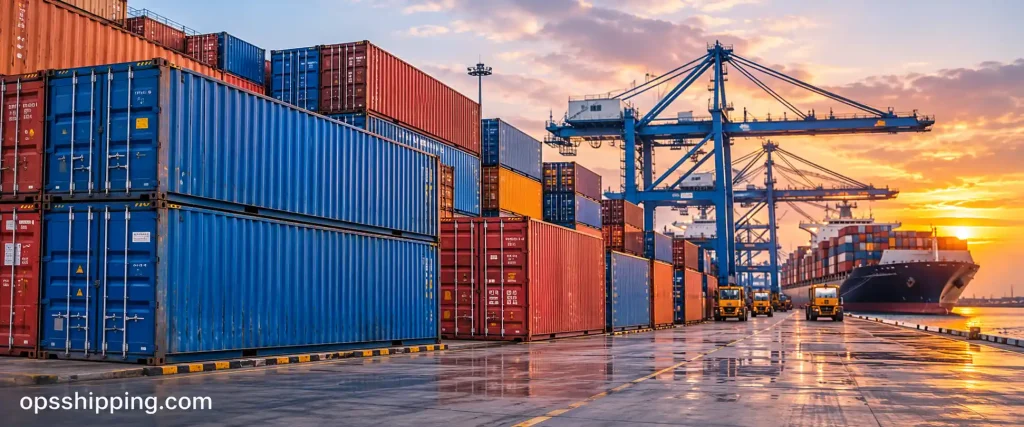
In international maritime transportation, returning a shipping container on time is just as important as receiving the cargo. When a container remains at a port terminal beyond the agreed free time, the importer or exporter may be charged a fee known as container demurrage. If the delay continues, these charges can significantly increase the overall cost of an international shipment.
Demurrage commonly occurs when a loaded container remains inside the port terminal longer than the period allowed by the shipping line. However, the exact definition, calculation method, and applicable charges depend on the shipping contract, carrier policies, container type, trade route, and port of operation.
For importers, exporters, and logistics managers, understanding demurrage, distinguishing it from detention, and planning customs clearance and container collection are essential to controlling transportation costs.
In this guide, we explain what container demurrage means, when it applies, what causes it, how the charges are calculated, and how businesses can reduce the risk of unnecessary costs.
What Is Container Demurrage?
Container demurrage is a charge imposed by a shipping line or container service provider when a container remains inside a port terminal beyond the agreed free time.
In import shipments, this usually happens when a loaded container has been discharged from the vessel but is not collected from the terminal within the permitted period. For example, the importer may not have completed customs clearance, or the required documents and permits may not be ready for cargo release.
Once the free time expires, demurrage may be charged according to the applicable shipping line tariff.
In export shipments, depending on the contract and carrier procedures, charges may also apply when a container remains at the terminal beyond the permitted period before being loaded onto the vessel.
Important: Demurrage is not the same as port storage. A shipment may incur both shipping line demurrage and terminal storage charges. These costs should be reviewed separately.
What Is Container Free Time?
Free Time is the period during which a container can remain in a designated location without incurring demurrage or detention charges.
The duration and conditions of free time are specified by the shipping line or agreed upon in the shipping contract. They may vary according to:
- Shipping line and carrier policy
- Port of loading or discharge
- Trade route
- Container type and size
- Type of service
- Contractual arrangements
For example, suppose a shipping line grants seven days of free time for an import container. If the container remains at the terminal after this period, demurrage may become payable according to the carrier’s tariff.
The seven-day period in this example is illustrative only. It should not be considered a standard free-time allowance for all shipping lines or ports.
How Is Free Time Calculated?
To determine the exact free-time period, the following details should be confirmed:
- The date on which free-time calculation begins
- The number of free days granted
- Whether calendar days or working days apply
- How weekends and public holidays are treated
- The exact expiration date and time
- Any special conditions imposed by the shipping line or terminal
One common mistake is assuming that the vessel’s arrival date or cargo discharge date automatically determines the start of free time.
In practice, the applicable starting point depends on the shipping line’s terms and the relevant contractual conditions.
For this reason, importers should obtain written confirmation of the free-time period from the shipping line, its local agent, or their freight forwarder.
What Is the Difference Between Demurrage and Detention?
Demurrage and detention are both charges related to the use of shipping containers. However, they apply at different stages of the transportation process.
- Demurrage: A charge for keeping a container inside the port terminal beyond the permitted free time.
- Detention: A charge for keeping a container outside the terminal beyond the permitted period before returning it to the designated depot or location.
In simple terms, demurrage generally relates to delays in collecting a container from the terminal, while detention relates to delays in returning the container after it has been collected.
Demurrage vs. Detention: Key Differences
| Comparison | Demurrage | Detention |
|---|---|---|
| Meaning | Delay in collecting a container from the terminal | Delay in returning a container after collection |
| Location | Inside the port terminal | Outside the port terminal |
| Common stage in imports | Before the container leaves the port | After the container leaves the port |
| Common cause | Delayed customs clearance | Delayed unloading or container return |
| Calculation basis | Demurrage tariff and delay period | Detention tariff and delay period |
| Main prevention method | Faster customs clearance and collection | Efficient unloading and timely container return |
Practical example:
Suppose an imported container remains at the terminal for 10 days after discharge, while the agreed free time is seven days. Depending on the carrier’s terms, the three additional days may be subject to demurrage.
After the container leaves the port, if the importer fails to unload it and return the empty container within the permitted period, detention charges may also apply.
Therefore, a single shipment can incur both demurrage and detention at different stages of the transportation process.

What Causes Container Demurrage?
Demurrage usually results from delays in completing the procedures required to collect a container from the terminal. These delays can have several causes.
1. Delays in Customs Clearance
One of the most common reasons for demurrage is a delay in customs clearance.
If import documents are incomplete, required permits have not been obtained, or the shipment is awaiting customs assessment, the container may not be released from the terminal on time.
To reduce this risk, importers should prepare their documents and review customs requirements before the vessel arrives.
2. Incomplete Shipping and Import Documents
Missing or inconsistent information in commercial and shipping documents can delay the clearance process.
Common issues include:
- Differences between the commercial invoice and packing list
- Incorrect cargo descriptions or package quantities
- Errors in the bill of lading
- Missing certificates of origin, where required
- Incomplete permits and product certificates
- Inconsistencies between import registration details and shipping documents
Checking all documents before shipment can significantly reduce the likelihood of these problems.
3. Delays in Obtaining Required Permits
Certain products require specific permits or approvals before they can be imported.
The applicable requirements depend on the nature of the goods, their HS Code, country of origin, destination, and current import regulations.
If the importer is unaware of these requirements before shipment, the cargo may remain at the port while the necessary approvals are being obtained.
4. Delays in Foreign Currency and Related Payments
In some import procedures, financial and foreign exchange arrangements can affect the customs clearance timeline.
Delays in completing required payments, obtaining foreign currency, or fulfilling banking procedures may prevent the importer from completing the necessary import formalities.
The impact of these issues depends on the transaction structure, applicable regulations, and the status of the import documentation.
5. Customs Inspection and Cargo Examination
Some shipments require additional customs inspections or assessments because of their product type, documentation, tariff classification, or regulatory requirements.
Physical inspections, sampling, laboratory testing, and technical reviews can extend the clearance process.
Having complete technical documentation and coordinating the necessary procedures in advance can help prevent avoidable delays.
6. Unavailable Trucks or Inadequate Transportation Planning
Even when customs clearance has been completed, a shortage of suitable trucks or transportation equipment may delay container collection.
This is particularly important for heavy cargo, oversized shipments, and goods requiring specialized transportation equipment.
Planning inland transportation before the vessel arrives can help reduce the risk of demurrage.
7. Port Congestion and Terminal Disruptions
Port congestion, high vessel traffic, limited terminal capacity, adverse weather conditions, and equipment disruptions can affect container handling and collection times.
These factors are not always under the importer’s control. However, timely shipment tracking and communication with the relevant parties can improve operational planning.
How Is Container Demurrage Calculated?
Container demurrage is generally calculated according to the number of days a container remains at the terminal after the free-time period expires and the applicable shipping line tariff.
Many shipping lines use a tiered pricing structure. This means the daily charge may increase as the delay becomes longer.
Container Demurrage Calculation Formula
A simplified formula is:
Total Demurrage = Sum of (Chargeable Days in Each Tier × Daily Rate for That Tier)
Consider the following hypothetical tariff for an import container:
| Delay Period | Illustrative Daily Rate |
|---|---|
| First 3 days after free time | $50 |
| Days 4–6 | $80 |
| From day 7 onward | $120 |
If the container remains at the terminal for eight chargeable days after free time expires, the calculation would be:
- First 3 days: 3 × $50 = $150
- Next 3 days: 3 × $80 = $240
- Following 2 days: 2 × $120 = $240
Total Illustrative Demurrage: $630
These figures are hypothetical and are provided only to demonstrate the calculation method. They do not represent the current tariff of any specific shipping line.
What Factors Affect Demurrage Costs?
The total demurrage amount depends on several factors:
| Factor | Impact on Cost |
|---|---|
| Duration of delay | Longer delays generally result in higher charges |
| Container type | Standard and specialized containers may have different tariffs |
| Container size | Rates for 20-foot, 40-foot, and other container sizes may differ |
| Shipping line | Each carrier may have its own free-time policy and tariff |
| Port of discharge | Port conditions and applicable charges may vary |
| Free-time allowance | A longer free-time period may reduce the risk of charges |
| Contract terms | Negotiated conditions may affect rates and calculation methods |
There is no universal demurrage rate for all containers. To estimate the actual cost, the importer must review the relevant bill of lading, carrier tariff, and contractual conditions.
What Is the Difference Between Demurrage and Port Storage?
An important part of managing import costs is distinguishing shipping line demurrage from port storage charges.
Demurrage is generally charged by the shipping line or container service provider when a container remains in the terminal beyond the permitted free time.
Port storage, on the other hand, relates to the cost of keeping cargo or containers within the port or terminal facilities. It is calculated according to the applicable terminal or port tariff.
Demurrage vs. Port Storage
| Comparison | Demurrage | Port Storage |
|---|---|---|
| Nature of charge | Charge related to delayed container use | Charge for storing cargo or containers |
| Collected by | Shipping line or container provider | Port or terminal operator |
| Calculation basis | Container delay and carrier tariff | Storage period and applicable terminal tariff |
| Relationship to containers | Directly related to container use | May apply to containers or cargo storage arrangements |
As a result, an importer may face both demurrage and port storage charges for the same shipment.
To avoid errors when estimating import expenses, each charge should be reviewed separately.
How Does Demurrage Differ in Import and Export Shipments?
Although demurrage generally relates to delays involving containers at port terminals, the circumstances can differ between import and export operations.
Demurrage in Imports
In import shipments, demurrage commonly occurs when a loaded container remains at the destination terminal beyond the agreed free time after vessel discharge.
Typical causes include:
- Delays in customs declaration and clearance
- Incomplete import documentation
- Missing permits and regulatory approvals
- Delays in completing required payments
- Unavailability of suitable inland transportation
Demurrage in Exports
In export shipments, the situation depends on the shipping line’s terms and the arrangements for delivering the container to the terminal.
For example, if a loaded export container is delivered to the terminal but remains there beyond the permitted period before vessel loading, demurrage may apply under the relevant contract.
Possible causes include:
- Incomplete export documentation
- Delays in customs procedures
- Cargo not being ready for delivery
- Changes in vessel schedules
- Delays in coordination with the terminal or shipping line
In both cases, carefully monitoring container delivery schedules and free-time conditions is essential.
How Can You Avoid Container Demurrage?
Preventing demurrage is not simply a matter of acting quickly at the port. It requires proper planning before shipment and effective coordination among all parties involved in the supply chain.
The following measures can help reduce the risk of unnecessary charges.
1. Prepare Shipping Documents Before Vessel Arrival
Commercial and shipping documents should be reviewed before the vessel reaches the destination port.
The commercial invoice, packing list, bill of lading, and required permits should contain consistent information regarding cargo description, quantity, weight, value, and other relevant details.
2. Start Customs Clearance Procedures Early
Importers should avoid waiting until the cargo reaches the port before beginning all administrative and customs procedures.
Where possible, import requirements should be reviewed, documents prepared, import registration completed, and necessary permits obtained before the vessel arrives.
3. Confirm the Free-Time Allowance in Writing
One of the most important preventive measures is obtaining clear written confirmation of free time from the shipping line or its local representative.
The following details should be confirmed:
- Number of free days
- Starting date of free-time calculation
- Expiration date and time
- Demurrage tariff after free time
- Any applicable tiered rates
- Conditions for requesting an extension
4. Monitor Shipment Status Regularly
Importers and logistics managers should track the shipment from vessel departure to arrival, discharge, document release, and container collection.
Monitoring the estimated time of arrival (ETA), vessel discharge, and customs clearance status supports better planning.
5. Coordinate with the Freight Forwarder and Shipping Company
Effective communication between the importer, international freight forwarder, shipping line, customs broker, and inland transportation provider can reduce delays between different stages of the process.
For example, even if customs clearance is nearly complete, a lack of available trucks may prevent the container from leaving the terminal. Arranging inland transportation in advance can reduce this risk.
6. Request Additional Free Time Before Shipment
Depending on the route and contractual arrangements, it may be possible to negotiate a longer free-time allowance.
This depends on the shipping line’s policies, container type, shipment volume, trade route, and agreement between the parties.
If customs clearance is expected to take longer than usual, requesting additional free time before the shipment begins may help reduce the risk of demurrage.
7. Plan Container Unloading and Return
After the container leaves the port, the importer should have a clear plan for unloading the cargo and returning the empty container to the designated location.
This helps control detention charges and reduces additional expenses throughout the import process.
What Should You Do If Demurrage Charges Have Already Occurred?
Even with careful planning, delays outside the importer’s control may happen. In such situations, the following steps can help prevent further costs:
- Check the free-time start and expiration dates: Confirm when the free-time period began and ended.
- Request an itemized invoice: Ask the shipping line to provide the chargeable days and the rate applied to each period.
- Review the bill of lading: Check the contractual conditions relating to free time and demurrage tariffs.
- Identify the cause of the delay: Determine whether the issue was related to documentation, customs, the terminal, inland transportation, or another factor.
- Request a review if discrepancies exist: If the dates or charges do not match the agreed terms, submit supporting documents and request a review.
- Prioritize container collection: Continue working to complete customs clearance and remove the container while the charges are being reviewed.
Can Demurrage Charges Be Waived or Reduced?
In certain circumstances, importers may request a review, discount, or waiver from the shipping line or its local agent. However, approval is not guaranteed.
Possible grounds for a review may include:
- Errors in the calculation
- Incorrect free-time dates
- Previous agreements concerning additional free time
- Documented operational circumstances
- Other conditions recognized under the shipping contract
To support a request, the importer should provide the relevant shipping documents, arrival and discharge dates, correspondence, and evidence explaining the delay.
The Role of an International Freight Forwarder in Reducing Demurrage
An international freight forwarder can play an important role in reducing demurrage risks through logistics coordination, shipment monitoring, and timely communication.
Its role is not limited to transporting cargo from origin to destination. It may also involve planning the shipment, coordinating with shipping lines, tracking cargo status, and helping manage the timing of different transportation stages.
Key activities may include:
- Reviewing shipping terms and free-time allowances before finalizing the shipment plan
- Providing updates on estimated vessel arrival
- Coordinating with shipping line representatives and operational partners
- Following up on shipping documents and information required for customs clearance
- Coordinating container collection from the port
- Planning inland transportation and cargo delivery
- Communicating potential delays and operational risks
However, responsibility for customs clearance, permits, and legal obligations depends on the agreed scope of services and the role of each party. Clearly defining responsibilities from the beginning is therefore essential.

Practical Checklist for Preventing Container Demurrage
Use the following checklist before shipment and as the vessel approaches the destination port.
Before Shipment
I have reviewed the demurrage and detention terms in the shipping contract.
I have received written confirmation of the free-time allowance.
I have checked the demurrage tariff and any tiered rates.
I have considered whether additional free time can be negotiated.
I have checked commercial and shipping documents for inconsistencies.
I have identified the permits and approvals required for the cargo.
Before Vessel Arrival
I am monitoring the estimated time of arrival.
I have started the necessary customs clearance procedures.
I have coordinated with the customs broker regarding the shipment status.
I have arranged suitable transportation for container collection.
I have estimated the potential port and logistics expenses.
After Vessel Discharge
I have reconfirmed the start and expiration of free time.
I am following up on customs clearance and permits.
I have coordinated the container collection schedule.
I have planned cargo unloading and empty container return.
I am monitoring the detention allowance separately.
Frequently Asked Questions About Container Demurrage
Container demurrage is a charge imposed when a container remains inside a port terminal beyond the free-time allowance specified by the shipping line or applicable contract.
Demurrage generally starts after the agreed free-time period expires. The starting date and calculation method depend on the shipping contract and carrier terms.
Demurrage applies when a container remains inside the port terminal beyond free time. Detention applies when the container is kept outside the terminal longer than the permitted period before being returned.
There is no universal rate. Demurrage costs depend on the shipping line, port, container type and size, duration of delay, and applicable tariff.
No. Demurrage is generally a charge related to delayed container use, while port storage is a charge for keeping cargo or containers in terminal facilities. Both may apply to the same shipment.
Yes. Preparing documents in advance, starting customs clearance early, confirming sufficient free time, and coordinating container collection can significantly reduce the risk of demurrage.
In some cases, additional free time can be negotiated with the shipping line. Approval depends on carrier policy, route, container type, and contractual arrangements.
Not necessarily. In FCL shipments, the container is generally allocated to a single shipper or consignee, and demurrage and detention conditions are defined by the applicable contract. In LCL shipments, multiple consignments share a container, and container-related costs and responsibilities may be managed under the agreement between the freight forwarder and the cargo owners. The relevant service terms should always be checked.
The applicable charges and the possibility of disputing them depend on the shipping contract, the cause of the delay, and the carrier’s terms. If supporting evidence is available, the importer may request a review, but a waiver is not guaranteed.
Conclusion: Time Management Is Essential for Controlling Demurrage Costs
Container demurrage is an important cost in maritime transportation. It generally occurs when a container remains at a port terminal beyond the agreed free-time allowance. Delays in customs clearance, incomplete documents, missing permits, unavailable inland transportation, and port disruptions can all contribute to additional charges.
To manage this risk, importers should review free-time conditions and shipping line tariffs before the shipment begins. They should also prepare the necessary documents, plan customs clearance, and arrange container collection and transportation in advance.
Ultimately, controlling demurrage is not simply a matter of completing customs clearance quickly. It requires effective coordination between the cargo owner, international freight forwarder, customs broker, shipping line, and inland transportation providers.
OPS Shipping (Oceanic Paiman Sepid) provides international transportation and logistics coordination services, helping businesses manage cargo movements from origin to destination through better planning and operational follow-up.
If your business needs support with ocean freight, transportation planning, shipment coordination, or estimating logistics costs, contact OPS Shipping to discuss your shipment requirements and available solutions.