


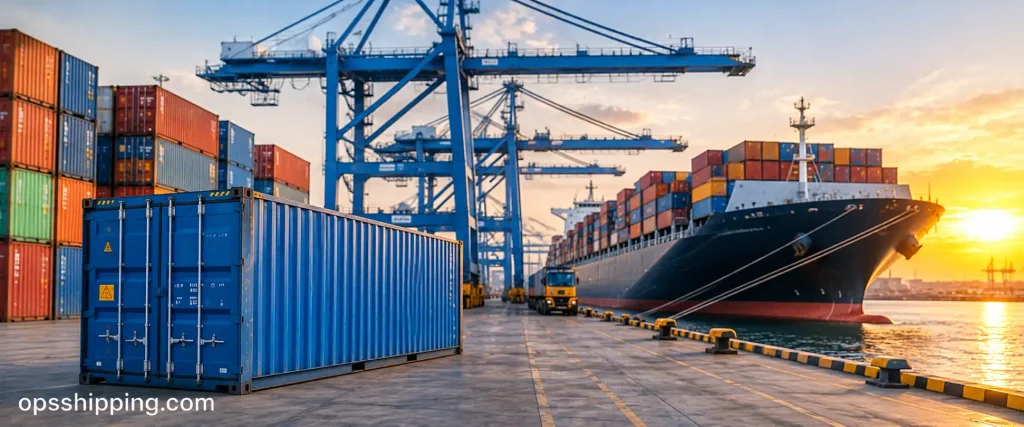
In international shipping, time management is just as important as freight costs. Once a container arrives at its destination port, importers have a limited period to collect the cargo, complete the necessary procedures, and return the empty container without paying additional charges. This period is known as Container Free Time.
Understanding how free time works can help importers and exporters avoid unexpected expenses, coordinate customs clearance more effectively, and manage their supply chains more efficiently.
In this guide, we explain what container free time means, how it is calculated, the different types of free time, the factors that affect it, and practical ways to avoid demurrage and detention charges.
What Is Container Free Time?
Container Free Time is the period during which a shipping line or container terminal allows a customer to use a container or keep it at the port without incurring additional charges.
The exact duration and conditions depend on the shipping line, destination port, type of cargo, transport agreement, and applicable tariff.
Free time generally gives the importer or consignee an opportunity to:
- Complete customs clearance procedures.
- Arrange the necessary documents and permits.
- Pay applicable duties and taxes.
- Collect the container from the port.
- Unload the cargo.
- Return the empty container to the designated depot.
Once the permitted free-time period expires, additional charges may apply. These charges are commonly known as Demurrage and Detention.
Why Is Container Free Time Important?
Free time directly affects the total cost and operational planning of an international shipment.
If an importer does not collect the container or return it within the agreed period, additional charges can accumulate. Depending on the shipping line’s tariff and the length of the delay, these costs can become substantial.
Understanding free time helps businesses:
- Reduce unexpected shipping and storage expenses.
- Plan customs clearance and cargo collection more accurately.
- Coordinate trucking, warehousing, and unloading operations.
- Avoid delays in returning empty containers.
- Negotiate more suitable shipping conditions before booking.
For importers handling multiple containers, effective free-time management can make a significant difference to overall logistics costs.
What Are the Different Types of Container Free Time?
Free time is generally divided into three main categories: Demurrage Free Time, Detention Free Time, and Combined Free Time.
1. Demurrage Free Time
Demurrage Free Time refers to the period during which a container can remain inside the port or container terminal after the relevant starting event without demurrage charges.
The starting point is determined by the shipping line’s tariff or transport agreement. Depending on the applicable terms, it may be calculated from the date of discharge, container availability, or another specified event.
If the container remains at the terminal after this period expires, demurrage charges may apply.
2. Detention Free Time
Detention Free Time is the period allowed for using the shipping line’s container outside the port after it has been collected.
This period generally covers the time needed to transport the container, unload the cargo, and return the empty container to the designated depot.
If the empty container is not returned within the permitted period, detention charges may apply.
3. Combined Free Time
Combined Free Time refers to an arrangement in which the available free-time allowance covers both the period the container stays at the terminal and the period it remains outside the port.
For example, a shipping line may offer a combined allowance of 14 days. The customer can use this period across the relevant stages, subject to the carrier’s terms and the agreed calculation method.
Combined free time can provide greater flexibility, but its conditions should always be confirmed in writing.
How Is Container Free Time Calculated?
Free time is not necessarily calculated in the same way by every shipping line. The calculation depends on the contract, tariff, port regulations, and the type of free-time arrangement.
To calculate it correctly, you should first identify the following:
- Free-time allowance: Determine the number of days granted by the shipping line.
- Starting date: Check the event from which the free-time period begins, such as discharge or container availability.
- Counting method: Confirm whether the period is calculated in calendar days or working days.
- Expiry date: Calculate the final day of the permitted period according to the applicable terms.
- Relevant deadline: For demurrage, identify the deadline for collecting the container; for detention, identify the deadline for returning the empty container.
A Practical Example
Suppose a shipping line grants an importer 7 calendar days of demurrage free time.
Assume that, under the applicable tariff, the free-time period begins on the day after the container is discharged.
If the container is discharged on June 1:
- June 2: Day 1
- June 3: Day 2
- June 4: Day 3
- June 5: Day 4
- June 6: Day 5
- June 7: Day 6
- June 8: Day 7
In this example, June 8 is the final free-time day. If the container is not collected by the applicable deadline, demurrage charges may begin according to the shipping line’s tariff.
Important: This is an illustrative example, not a universal calculation rule. Some carriers include the discharge date, use a different starting event, or apply specific rules for weekends and public holidays. Always verify the exact terms for your shipment.

What Factors Affect Container Free Time?
The amount of free time granted to a shipment can vary considerably. Several factors may influence the allowance:
1. Shipping Line Policies
Each shipping line has its own free-time policies and tariffs. The number of days offered may also vary depending on the route and destination.
2. Destination Port
Port congestion, terminal operating conditions, local regulations, and operational limitations can affect free-time arrangements and the time available for collecting containers.
3. Type of Cargo
Certain cargo types require additional handling, inspections, permits, or special storage conditions. These requirements can affect the time needed to complete the import process.
4. Type of Container
The type and size of the container may influence the applicable terms. Standard dry containers, refrigerated containers, open-top containers, and other specialized equipment may be subject to different conditions.
5. Shipping Contract and Negotiations
Free time may be negotiated as part of the shipping agreement. Businesses with regular shipment volumes may be able to request more favorable conditions from the shipping line or freight forwarder.
6. Customs Clearance Procedures
Delays in documentation, inspections, permits, or payment of customs duties can prevent the importer from collecting the container before free time expires.
What Is the Difference Between Free Time, Demurrage, and Detention?
These three terms are closely related but refer to different aspects of container use.
| Term | Meaning |
|---|---|
| Free Time | The permitted period before additional charges apply |
| Demurrage | Charges for keeping a container at the port or terminal beyond the allowed period |
| Detention | Charges for keeping a shipping line’s container outside the port beyond the allowed period |
In simple terms:
- Free Time is the period during which no demurrage or detention charges are incurred under the applicable terms.
- Demurrage generally relates to delays in collecting a container from the terminal.
- Detention generally relates to delays in returning the empty container after collection.
It is also important to distinguish demurrage and detention from terminal storage charges. Depending on the port and agreement, storage fees may be charged separately from shipping-line demurrage.
How Can You Request an Extension of Container Free Time?
If you expect that customs clearance, cargo collection, or unloading may take longer than the permitted period, it is advisable to contact the shipping line or your freight forwarder before free time expires.
You can take the following steps:
- Review the shipping agreement: Check the original free-time allowance and the conditions for requesting an extension.
- Contact the shipping line or agent early: Do not wait until the final day to request additional time.
- Explain the reason for the delay: Provide relevant information about customs procedures, inspections, documentation, or operational issues.
- Request an extension in writing: Clearly state how many additional days are required.
- Confirm the revised deadline: Make sure the extension has been approved and recorded.
An extension is not automatic. The shipping line may approve, reject, or charge for the additional days, depending on the agreement and operational conditions.
What Happens When Container Free Time Expires?
When the permitted free-time period ends, additional charges may begin.
The applicable charges depend on the type of delay, the shipping line’s tariff, and the port’s regulations.
Common charges include:
- Demurrage: Applied when a container remains at the terminal beyond the permitted period.
- Detention: Applied when a container is kept outside the terminal beyond the permitted return period.
- Terminal Storage: Charged by the terminal for occupying storage space beyond the permitted period, where applicable.
Some shipping lines use progressive charging structures. This means the daily rate may increase as the delay continues.
For this reason, importers should not assume that the daily charge remains constant throughout the entire delay period.
How Can You Avoid Demurrage and Detention Charges?
Avoiding additional container charges requires coordination between the shipping line, customs broker, freight forwarder, trucking company, and importer.
The following practices can help reduce the risk:
1. Prepare Documents Before the Vessel Arrives
Make sure the commercial invoice, packing list, bill of lading, permits, and other required documents are ready as early as possible.
2. Monitor the Vessel’s Arrival and Container Availability
Track the shipment and confirm the actual discharge and availability dates with the shipping line or its local agent.
3. Start Customs Clearance Early
Where permitted, begin preparing customs documentation and other required procedures before the container arrives.
4. Arrange Transportation in Advance
Coordinate with the trucking company to ensure that a suitable vehicle is available when the container is released.
5. Plan Cargo Unloading
Arrange warehouse capacity, unloading equipment, and staff in advance to avoid unnecessary delays after the container leaves the port.
6. Monitor the Free-Time Expiry Date
Record the start date, expiry date, and empty-container return deadline. Set reminders several days before each deadline.
7. Negotiate More Free Time When Necessary
If your business regularly handles shipments that require lengthy customs or unloading procedures, request a suitable free-time allowance when negotiating the shipping terms.

Is Free Time Different for FCL and LCL Shipments?
Yes. The way free time is applied can differ between FCL and LCL shipments.
FCL (Full Container Load) means that a full container is allocated to one shipper or consignee. In this case, the importer generally needs to coordinate container collection, unloading, and empty-container return within the applicable free-time period.
LCL (Less than Container Load) means that multiple shipments from different customers are consolidated into one container. The cargo is generally handled through a container freight station (CFS) or another designated facility.
In LCL shipments, the consignee may be responsible for charges such as storage, handling, or delays under the applicable consolidation and destination terms. The free-time arrangements may therefore differ from those of a full-container shipment.
Before shipping, it is important to clarify which charges apply to your specific FCL or LCL arrangement.
Container Free Time Management Checklist
Use this checklist to manage free time more effectively:
Confirm the free-time allowance with the shipping line.
Identify the exact event that starts the free-time calculation.
Check whether days are counted as calendar days or working days.
Confirm the container discharge and availability dates.
Prepare customs documents and required permits.
Coordinate container collection with the trucking company.
Arrange unloading and warehouse capacity.
Confirm the empty-container return location and deadline.
Monitor the expiry date and set reminders.
Contact the shipping line before expiry if an extension is required.
The Role of a Freight Forwarder in Managing Container Free Time
A professional freight forwarder can help importers coordinate the different stages of international transportation and reduce the risk of unnecessary delays.
Depending on the agreed scope of services, a freight forwarder can assist with:
- Coordinating with shipping lines and their local agents.
- Monitoring shipment progress and arrival information.
- Reviewing shipping documents and relevant deadlines.
- Coordinating transportation and container collection.
- Supporting communication between the importer, customs broker, and other service providers.
- Helping identify potential delays before they result in additional charges.
Effective coordination is particularly important when shipments involve complex customs procedures, multiple service providers, or tight delivery schedules.
Frequently Asked Questions About Container Free Time
There is no fixed worldwide allowance. The number of days depends on the shipping line, destination port, route, contract, and type of shipment. The exact allowance should be confirmed before booking.
It depends on the shipping line’s terms. Some agreements calculate free time in calendar days, while others may apply working-day rules or specific holiday provisions.
Demurrage generally starts after the permitted terminal free-time period expires. The exact starting point and deadline depend on the applicable tariff and agreement.
Detention generally applies when the container is kept outside the port beyond the permitted period for returning the empty equipment. The calculation rules should be confirmed with the shipping line.
Yes, an extension may be possible if the shipping line approves the request. It is best to request additional time before the original free-time period expires.
No. Demurrage is generally charged by the shipping line for keeping its container at the terminal beyond the permitted period. Terminal storage is charged for occupying terminal space. Depending on the port and agreement, both charges may apply.
Responsibility depends on the sales contract, transport agreement, and the parties’ obligations. The importer or consignee may be responsible in many import transactions, but the specific contractual terms determine who bears the cost.
No. Free-time conditions can vary depending on the shipping line, equipment type, cargo, route, and destination.
By preparing documents in advance, starting customs procedures early, coordinating transportation and unloading, monitoring deadlines, and negotiating sufficient free time before shipment.
Final Thoughts
Container Free Time is an important factor in managing international shipping costs and delivery schedules. A clear understanding of demurrage, detention, and the applicable free-time conditions helps businesses avoid unexpected expenses and organize their import operations more efficiently.
The key is to confirm the exact terms before shipment, prepare the required documents in advance, and coordinate every stage from vessel arrival to empty-container return.
OPS Shipping supports businesses with international freight and logistics coordination, helping importers and exporters manage shipping processes more effectively. Contact our team to discuss your transportation requirements and find a suitable solution for your shipment.