


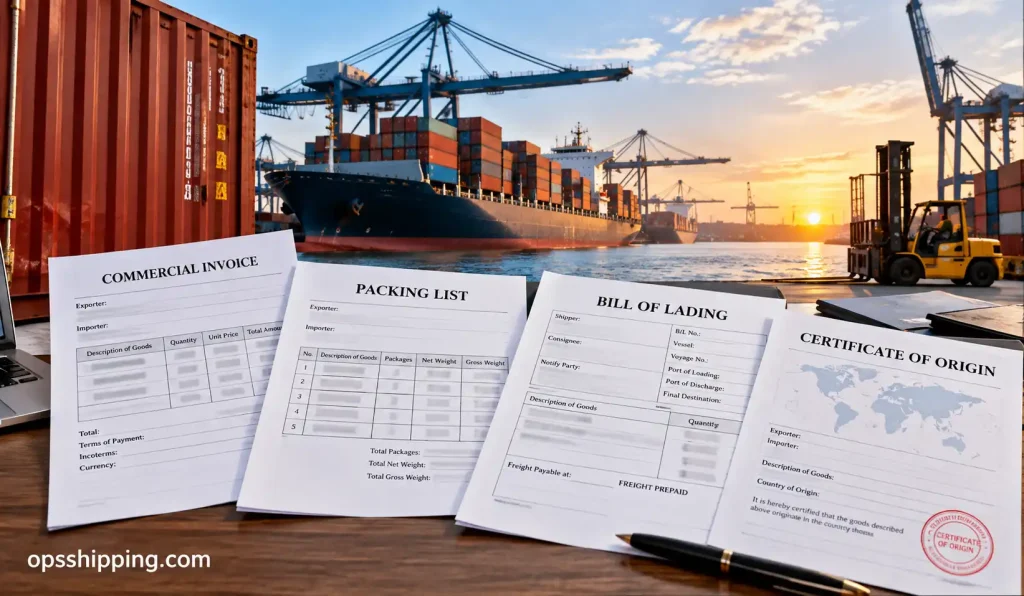
The documents required for importing goods into Iran are among the most important aspects every importer should understand before purchasing and shipping a commercial consignment. Importing is not simply a matter of buying goods from a foreign supplier and transporting them to Iran. Different documents may be required throughout the process, from order registration and international shipping to customs procedures and final clearance.
A Proforma Invoice, Commercial Invoice, Packing List, Bill of Lading, Certificate of Origin, order registration documents, and product-specific permits are among the key documents that may be required during an import transaction.
However, the required documents are not identical for every shipment. The type of goods, HS Code, country of origin, shipping method, terms of sale, and applicable regulations can all affect the documentation requirements.
In this guide, we explain the main documents required for importing goods into Iran, the purpose of each document, and the important details importers should check before shipping and customs clearance.
Why Are Import Documents Important?
Almost every stage of an import transaction depends on the information recorded in commercial, shipping, and customs documents.
Details such as the description of goods, quantity, weight, value, country of origin, buyer and seller information, and shipping details must be accurately stated in the relevant documents.
If the information is inconsistent across different documents, additional verification or document corrections may be required during order registration, transportation, or customs clearance.
For example, if the weight shown on the Packing List does not match the shipping documents, or the product description on the Commercial Invoice differs from the actual shipment, the customs clearance process may become more complicated.
For this reason, document preparation should not be postponed until the shipment reaches customs.
What Are the Main Categories of Import Documents?
Import documents can generally be divided into several categories.
1. Commercial Documents
These documents contain information about the transaction between the seller and buyer, including:
- Proforma Invoice
- Commercial Invoice
- Purchase contract, if applicable
2. Packing and Shipment Details
The most important document in this category is the Packing List, which provides information about packages, quantities, weight, dimensions, and packing arrangements.
3. Shipping Documents
Depending on the mode of transportation, shipping documents may include:
- Bill of Lading for sea freight
- Air Waybill for air freight
- Road transport documents
- Rail transport documents
4. Origin Documents
A Certificate of Origin identifies the country where the goods originated or were manufactured.
5. Import and Customs Documents
This category can include order registration documents, customs declarations, and other documents required for import procedures and customs clearance.
6. Product-Specific Permits and Certificates
Depending on the type of goods, additional permits, certificates, inspections, or approvals from relevant authorities may be required.
Therefore, importers should determine the exact documentation requirements for their products before completing the purchase.

1. Proforma Invoice
A Proforma Invoice is one of the first important documents used in the import process.
It is usually issued by the foreign supplier and outlines the preliminary terms of the transaction.
A Proforma Invoice may include:
- Seller information
- Buyer information
- Description of goods
- Quantity
- Unit price
- Total value
- Currency
- Country of origin
- Payment terms
- Incoterm or delivery terms
- Weight or volume, where applicable
- Validity period
- Shipping information, if agreed
The Proforma Invoice is particularly important during the early stages of an import transaction because many commercial details are established based on this document.
Before accepting a Proforma Invoice, importers should carefully verify the product description, quantity, price, delivery terms, and details of both parties.
2. Commercial Invoice
The Commercial Invoice is a key document showing the final commercial details of the sale.
It is generally issued once the transaction has been finalized and plays an important role in international transportation and customs clearance.
A Commercial Invoice commonly contains:
- Seller details
- Buyer details
- Invoice number and date
- Detailed description of goods
- Quantity
- Unit price
- Total value
- Transaction currency
- Country of origin
- Terms of sale or delivery
The information on the Commercial Invoice should correspond with the actual transaction and other shipment documents.
One important point is that the description of goods should not be excessively vague or generic. It should be sufficiently detailed to allow the goods to be properly identified.
3. Packing List
A Packing List provides information about the physical structure and packaging of the shipment.
It is generally prepared by the seller or exporter and may contain:
- Number of packages
- Type of packaging
- Net weight
- Gross weight
- Package dimensions
- Package numbers
- Quantity of goods in each package
- Product description
- Shipping marks and numbers
The Packing List is particularly important for shipments containing several products or a large number of cartons, pallets, or packages.
The information on this document should accurately reflect the actual shipment.
For example, if the Packing List states that the shipment contains 20 pallets while the actual cargo contains 21, the discrepancy should be investigated and corrected before shipment.

4. Bill of Lading
The Bill of Lading (B/L) is one of the most important international shipping documents.
The type of transport document depends on the method used to move the goods. In sea freight, the Bill of Lading is one of the primary documents associated with the shipment.
A Bill of Lading may contain information such as:
- Shipper
- Consignee
- Notify Party
- Port of Loading
- Port of Discharge
- Cargo description
- Number of packages
- Weight
- Container number, for containerized shipments
- Vessel and voyage information
Before the Bill of Lading is finalized, its details should be compared with the Commercial Invoice, Packing List, and actual shipment information.
If your shipment originates in China and is transported by sea, understanding the shipping route and container transportation process is also important. For a detailed overview, read our guide to “Sea Freight from China to Iran.”
5. Certificate of Origin
A Certificate of Origin is a document used to identify the country of origin of the goods.
The country of origin is not necessarily the same as the country from which the shipment is dispatched.
For example, a product may be manufactured in one country but shipped to Iran from another country.
Therefore, importers should distinguish between the country of origin and the country of shipment.
Depending on the product, transaction, and applicable import requirements, a Certificate of Origin may form part of the documentation required for customs procedures.
6. Order Registration Documents
Order registration is another important part of the commercial import process.
At this stage, information such as the following may need to be recorded and reviewed according to current regulations:
- Importer information
- Supplier information
- Product details
- Value of goods
- Quantity
- Country of origin
- HS Code
- Terms of transaction
- Proforma Invoice details
Because import regulations and procedures can change, importers should verify the current requirements applicable to their specific goods before purchasing and shipping the cargo.
7. Import Permits
Not every product requires the same permits.
The permits and approvals required depend on the type of goods, HS Code, and applicable regulations.
Certain product groups may require specialized permits or approvals, including:
- Food products
- Health-related products
- Medical equipment
- Certain chemicals
- Products subject to mandatory standards
- Telecommunications equipment
- Certain machinery or specialized equipment
- Agricultural or animal products
- Certain products containing batteries or special materials
One of the most important steps before making payment and shipping the goods is therefore to determine which permits are required and at what stage they must be obtained.
Shipping the goods first and investigating permit requirements only after the cargo arrives can increase the risk of delays and additional costs.
8. Cargo Insurance Documents
Depending on the terms of sale and transportation arrangement, cargo insurance may also be arranged for the shipment.
Insurance documents provide information about the coverage applicable to the cargo and the terms of the insurance.
When reviewing cargo insurance, importers should consider questions such as:
- Which risks are covered?
- What is the insured value?
- Where does the coverage begin?
- Where does the coverage end?
- What documents are required in the event of a claim?
Insurance coverage should be selected according to the value and nature of the goods, transportation route, and shipping conditions.
9. Inspection and Standard Certificates
Depending on the type of goods, documents related to inspection, standards, or technical compliance may also be required.
These requirements are not the same for every product.
Certain goods may need to demonstrate compliance with specific technical or regulatory requirements before shipment or during the import process.
Therefore, importers should not assume that having a Commercial Invoice, Packing List, and Bill of Lading will always be sufficient.
The nature of the goods determines which additional documents and approvals may be required.
10. Customs Declaration
Once the goods arrive at customs, the shipment information must be declared as part of the customs clearance process.
Information such as the product description, customs value, tariff classification, quantity, weight, origin, and other relevant details may be required during customs declaration.
Documents prepared during the earlier stages of the import process are also important at this stage.
If the information in these documents does not correspond with the actual goods or the information declared to customs, further review or corrections may be required.
Is a Commercial Card Required to Import Goods into Iran?
For commercial imports into Iran, the legal status and eligibility of the importer are also important parts of the import process.
A commercial card is commonly associated with commercial import and export activities in Iran. However, the exact requirements, exemptions, and conditions may depend on the type of import and current regulations.
Individuals and companies planning to begin commercial importing should therefore verify their legal and commercial eligibility before purchasing goods from an overseas supplier.
How Does the HS Code Affect Import Documents?
The HS Code is more than simply a number used to calculate customs tariffs.
Correct product classification can affect:
- Customs duties and tariffs
- Required permits
- Import restrictions
- Standards and technical requirements
- Customs declaration procedures
For this reason, the HS Code should ideally be reviewed before the purchase is finalized.
If a product is initially assessed under an incorrect tariff classification, the importer may assume that no special permit is required and later discover different requirements during import or customs clearance.
What Documents Should Be Prepared Before Shipping?
One of the best ways to prevent problems at destination is to check the documentation before the shipment leaves the country of origin.
Depending on the goods and transaction, importers should verify the status of:
- Proforma Invoice
- Commercial Invoice
- Packing List
- HS Code
- Order registration documents
- Required permits
- Cargo insurance
- Inspection or standard documents, where required
- Information required for the transport document
- Correct buyer and seller information
It is also advisable to review drafts of important shipping documents before they are finalized.
Correcting an error while the cargo is still at origin is generally easier than correcting it after the shipment has arrived at destination.
What Documents Are Required for Shipping?
The required transport document depends on the method of transportation.
Sea Freight: For sea freight, the Bill of Lading is one of the main transport documents.
Air Freight: For air cargo, an Air Waybill (AWB) is generally used.
Road Freight: International road transportation uses transport documentation appropriate to the route and shipping arrangement.
Rail Freight: Rail freight also involves transport documentation based on the route and the carriers involved.
Therefore, the transport document should always correspond to the actual method used to move the cargo.

Documents Required for Customs Clearance in Iran
During customs clearance, a combination of commercial documents, transport documents, and product-related permits may be required.
Depending on the shipment, these can include:
- Commercial Invoice
- Packing List
- Transport documents
- Certificate of Origin, where required
- Order registration documents
- Product-specific permits
- Insurance documents, where applicable
- Inspection or standard certificates, where required
- Documents relating to the owner of the goods or authorized representative
- Other documents required according to the goods and customs procedure
Therefore, there is no single fixed document list that applies to every shipment. The exact requirements should be determined according to the actual product and import conditions.
For a broader explanation of document review, customs procedures, and the steps involved in releasing imported goods, read our guide to “What Is Customs Clearance and How Does It Work?”
What Is the Difference Between a Proforma Invoice and a Commercial Invoice?
These two documents are sometimes confused.
A Proforma Invoice is generally issued before the transaction is fully finalized and outlines the proposed or initially agreed terms of the purchase.
A Commercial Invoice, on the other hand, is the commercial invoice relating to the finalized sale and contains the final details of the transaction.
In simple terms:
Proforma Invoice → Preliminary transaction and purchase terms
Commercial Invoice → Final commercial document for the sale
The main information in these documents should not contain significant unexplained discrepancies.
What Is the Difference Between a Commercial Invoice and a Packing List?
A Commercial Invoice primarily focuses on the commercial information and value of the goods.
A Packing List primarily describes the physical structure of the shipment.
For example:
The Commercial Invoice shows which goods were sold, their quantity, unit price, and total value.
The Packing List shows how those goods are packed, including the number of cartons or pallets, weight, dimensions, and packaging details.
These two documents complement each other.
The Most Important Rule: Keep Information Consistent Across Documents
One of the most important principles in managing import documentation is consistency.
Information such as:
- Product name
- Product model
- Quantity
- Weight
- Value
- Country of origin
- Buyer details
- Seller details
- Number of packages
- Shipping information
should not differ across documents without a valid reason.
For example, if the Commercial Invoice lists one product model while the Packing List shows another, the discrepancy should be investigated before the shipment is dispatched.
Checking documents before shipment can help prevent many corrections, delays, and additional costs later in the process.
Common Mistakes in Import Documentation
Using a Vague Product Description: Overly generic descriptions can make correct product identification and classification more difficult.
Using the Wrong HS Code: Incorrect tariff classification can affect permits, import costs, and customs procedures.
Weight Differences Between Documents: The weight stated on the Packing List and transport documents should be carefully checked.
Incorrect Buyer or Seller Information: Names, addresses, and other relevant details should be correctly stated across the required documents.
Checking Permits Only After Shipping: One of the riskiest mistakes is shipping a product first and only then checking whether special permits are required.
Failing to Review the Draft Bill of Lading: Bill of Lading details should ideally be reviewed before the final document is issued.
Poor Document Management: Commercial and transport documents should be stored in an organized manner so they can be quickly accessed when required.
Import Documentation Checklist
Before Purchasing
✅ The legal status of the goods for import has been checked.
✅ The HS Code has been identified.
✅ Potential permit requirements have been reviewed.
✅ Supplier information has been verified.
✅ The Proforma Invoice has been checked.
✅ Payment and delivery terms have been confirmed.
Before Shipping
✅ The Commercial Invoice has been reviewed.
✅ The Packing List matches the actual shipment.
✅ Weight and number of packages have been confirmed.
✅ Required permits have been obtained or their status confirmed.
✅ Cargo insurance arrangements have been reviewed.
✅ Bill of Lading information has been checked.
✅ Information across all documents has been cross-checked.
Before Customs Clearance
✅ Transport documents are available.
✅ The Commercial Invoice is available.
✅ The Packing List is available.
✅ Order registration documents have been reviewed.
✅ The Certificate of Origin is available where required.
✅ Product-specific permits are ready.
✅ Standard or inspection documents are available where required.
✅ The actual goods correspond with the documentation.
How Can Import Documents Affect Customs Clearance Costs?
Incomplete or inconsistent documents can affect not only the time required for customs clearance but also the importer’s overall costs.
If document corrections or additional verification extend the time that goods remain at the terminal or customs area, additional costs such as warehousing and other cargo-related charges may increase.
Document management should therefore be considered part of import cost management.
Documents Required for Importing from China to Iran
The same general principles of commercial and transport documentation apply when importing goods from China.
When purchasing from a Chinese supplier, it is useful to coordinate the preparation of documents such as:
- Proforma Invoice
- Commercial Invoice
- Packing List
- Certificate of Origin, where required
- Transport documents
- Product-related certificates or documentation
from the beginning of the transaction.
Before shipment, these documents should also be checked against the requirements applicable to importing the goods into Iran.
The Role of a Freight Forwarder in Import Documentation
An international freight forwarding company plays an important role in transportation and shipping-related documentation.
Depending on the scope of service, a freight forwarder may assist with:
- Receiving shipment information
- Coordinating transportation
- Collecting information required for transport documents
- Issuing or coordinating shipping documents
- Reviewing draft transport documents
- Coordinating with the shipper
- Tracking the shipment
- Providing information required for destination procedures
However, the responsibilities of the freight forwarder, seller, buyer, and customs broker should be clearly defined from the beginning.
This helps ensure that each party understands which documents they are responsible for preparing, providing, or reviewing.
FAQ
A Proforma Invoice, Commercial Invoice, Packing List, transport documents, Certificate of Origin where required, order registration documents, and product-specific permits are among the most important documents that may be required.
No. Documentation requirements depend on the type of goods, HS Code, transportation method, country of origin, import regulations, and product-specific permits.
A Packing List is a document that provides details about the number of packages, packaging type, weight, dimensions, and physical structure of a shipment.
A Commercial Invoice is the commercial document relating to the sale of goods. It typically contains buyer and seller information, product description, quantity, unit price, and total transaction value.
A Certificate of Origin identifies the country of origin of the goods and may be required as part of the import or customs documentation depending on the shipment.
This depends on the type of goods. Certain products may require specific permits, approvals, inspections, or certifications. These requirements should be checked before purchasing and shipping the cargo.
Inconsistencies between documents may require additional review or corrections. It is better to identify and resolve such discrepancies before the shipment leaves the country of origin.
Some documents are prepared during the purchasing and order registration stages, while others are created during shipping or customs clearance. The best approach is to identify the documentation requirements before finalizing the purchase and shipping the goods.
Conclusion
The documents required for importing goods into Iran are a fundamental part of international trade, and preparing them correctly can help prevent many problems during transportation and customs clearance.
The Proforma Invoice, Commercial Invoice, Packing List, transport documents, Certificate of Origin, order registration documents, and product-specific permits are among the main documents an importer may need to manage.
However, there is no universal document list for every shipment. The type of goods, HS Code, transportation method, country of origin, and current regulations determine the exact documentation requirements.
The best approach is to identify the relevant tariff classification, permits, and documentation requirements before purchasing and shipping the goods. Commercial Invoice, Packing List, and transport document details should also be carefully cross-checked before the shipment leaves the country of origin.
Opsshipping provides international freight transportation and logistics coordination services and can assist importers and commercial companies with transportation planning, shipping-related documentation, and the movement of commercial cargo from origin to destination.