


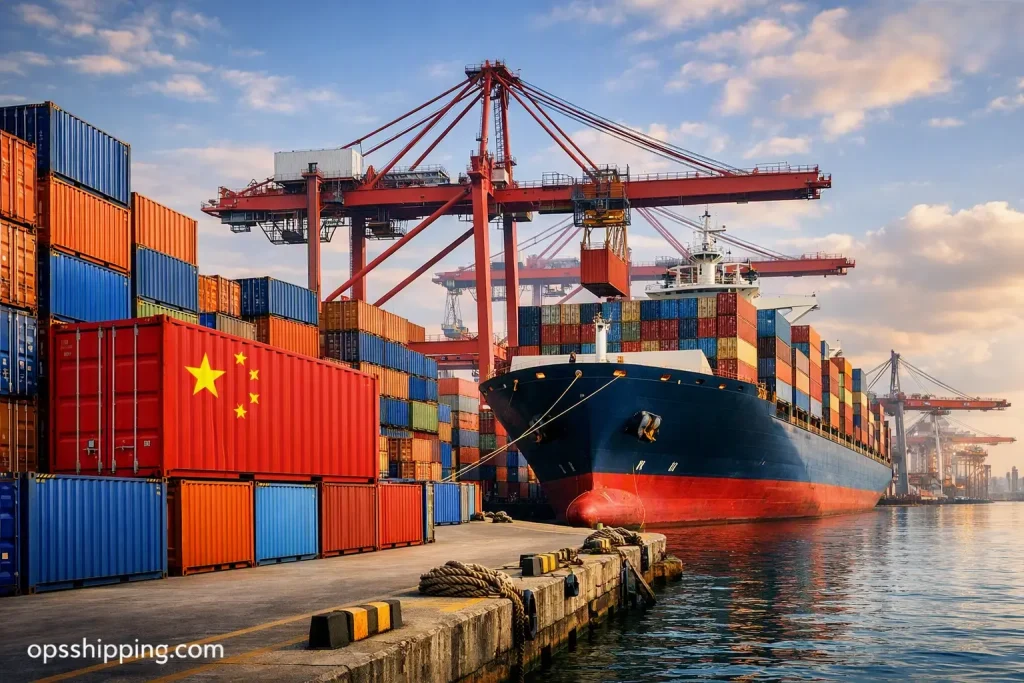
Importing goods from China to Iran is one of the most important sourcing routes for Iranian traders, commercial companies, and businesses. The wide range of products, large manufacturing capacity, specialized factories, and the possibility of purchasing goods in different quantities have made China one of the main sourcing markets for Iranian importers.
However, importing from China is not simply about finding a cheap product and shipping it to Iran. Selecting a reliable supplier, checking product quality, negotiating prices and purchasing terms, determining the HS Code, preparing documents, choosing the right shipping method, controlling costs, and completing customs clearance correctly all play an important role in the success of an import transaction.
In this guide, we examine the process of importing goods from China to Iran, from selecting the product and supplier to shipping, arrival in Iran, and customs clearance.
What Is Importing Goods from China?
Importing from China is the process through which an individual or company purchases goods or raw materials from a Chinese supplier or manufacturer and, after completing commercial procedures, international transportation, and customs formalities, brings them into Iran.
The process usually includes several main stages:
- Product selection
- Iranian market research
- Finding a supplier
- Receiving a Proforma Invoice
- Checking product specifications and quality
- Determining the HS Code
- Completing commercial and import procedures
- Choosing a shipping method
- Preparing documents
- Shipping the goods
- Arrival in Iran
- Customs procedures
- Payment of related costs
- Customs clearance and delivery
Therefore, successful importing should be considered a complete supply chain and logistics process, rather than simply an international purchase.
Why Is Importing from China Important for Iranian Traders?
China is one of the world’s largest manufacturing and export centers, and suppliers can be found there for a wide range of industries.
From consumer and electronic products to industrial equipment, machinery, components, raw materials, construction products, textiles, and specialized goods, China offers a very broad range of products.
One of China’s major advantages is the large number of suppliers. The same product may be offered by several factories with different levels of quality, production capacity, and pricing.
This allows importers to compare different suppliers before finalizing a purchase.
However, a lower purchase price in China does not necessarily mean that the import will be economically advantageous. Shipping, insurance, customs duties, clearance, warehousing, domestic transportation, and other costs must also be considered alongside the purchase price.
What Goods Can Be Imported from China?
China operates across a very wide range of industries, and the types of goods that can be imported depend on current Iranian regulations, the nature of the product, and the required permits.
Some common product categories imported from China include:
- Electronic equipment and accessories
- Industrial components
- Machinery and production equipment
- Raw materials
- Construction equipment and materials
- Tools
- Automotive and machinery components
- Lighting equipment
- Household appliances and related components
- Textiles and clothing
- Plastic products
- Medical and laboratory equipment, where the required permits are available
- Consumer goods
- Specialized equipment and components for different industries
Before purchasing any product, however, you should verify whether the product is legally permitted for import into Iran or requires specific permits.
The HS Code, applicable tariff, possible standards, and other legal requirements should also be determined before the purchase.

Steps for Importing Goods from China to Iran
The import process from China can be divided into several major stages. The exact details may vary depending on the product, shipment value, shipping method, and transaction terms.
1. Select the Product and Analyze the Iranian Market
The first step is selecting the product you intend to import.
At this stage, you should not focus only on the product’s price in China. First, determine the level of demand for the product in Iran and whether it can generate an acceptable profit margin after all import-related costs are taken into account.
The following factors should be evaluated before purchasing:
- Market demand
- Selling price in Iran
- Number of competitors
- Prices of similar products
- Import costs
- Shipping costs
- Customs duties and taxes
- Potential restrictions and permits
- Profit margin
- Foreign exchange risks
A product may have an attractive price in China, but after adding transportation and import costs, its final price in Iran may no longer be competitive.
Therefore, calculating the landed cost before purchasing is one of the most important stages of the import process.
2. Find a Reliable Supplier in China
After selecting the product, the next step is finding a suitable supplier.
China has a very large number of manufacturers, wholesalers, and trading companies, and their quality and business terms can vary significantly.
When evaluating a supplier, it is advisable to check:
- Company history
- Business address and registration information
- Export experience
- Production capacity
- Minimum order quantity
- Product quality
- Availability of samples
- Payment terms
- Production lead time
- Packaging conditions
- Ability to provide export documentation
- Communication and customer support
If the product is specialized or high-value, more detailed factory verification and obtaining a sample before placing the main order become even more important.
Important:
Do not select a supplier solely because they offer the lowest price. A small difference in the purchase price may be insignificant compared with the cost of poor-quality goods, delays, or discrepancies in the order.
3. Request a Sample and Conduct Quality Control
For many products, checking a sample before placing the main order can help reduce transaction risks.
The sample should be evaluated based on factors such as:
- Build quality
- Material
- Dimensions
- Color
- Performance
- Packaging
- Technical specifications
- Required standards
If the order is large, the agreed technical specifications should preferably be documented in writing so that the final production does not differ from the approved sample or order specifications.
For sensitive products, quality inspection before shipment can also help prevent certain problems when the goods arrive in Iran.
4. Negotiate the Price and Transaction Terms
After approving the supplier, the next step is negotiating the transaction terms.
Do not evaluate only the unit price. Factors such as minimum order quantity, packaging costs, production lead time, payment terms, delivery terms, and inland transportation costs in China can also affect the final price.
You should also determine which Incoterm or delivery condition the quoted price is based on.
For example, a factory price is not necessarily the same as a price for delivery to a warehouse or port.
Therefore, before comparing two suppliers, make sure their prices are based on comparable delivery conditions.
5. Receive the Proforma Invoice
After reaching an agreement with the supplier, the transaction details are generally documented in a Proforma Invoice.
A Proforma Invoice may include:
- Seller information
- Buyer information
- Product description and specifications
- Quantity
- Unit price
- Total price
- Transaction currency
- Weight and volume
- Payment terms
- Delivery terms
- Country of origin
- Validity period
The information in this document should be consistent with the actual goods and subsequent shipping and commercial documents.
6. Check the HS Code
One of the most important steps before shipping the goods is determining the correct HS Code.
The HS Code is used to classify goods in international trade and plays an important role in determining customs tariffs and certain import requirements.
Incorrect classification may lead to discrepancies in customs cost calculations, document corrections, or delays during the customs clearance process.
Therefore, the HS Code should be checked before the final purchase and before the goods are shipped, rather than after the shipment has already arrived at customs.
7. Check Import Permits and Requirements
Some products may require specific permits or approvals in addition to standard commercial documents.
Depending on the type of product, issues such as the following may require additional verification:
- Standards
- Health requirements
- Medical equipment regulations
- Food regulations
- Chemicals
- Batteries and dangerous goods
- Telecommunications equipment
- Specialized components
- Branded products
Therefore, before shipping the goods, you should determine whether the product is subject to any restrictions or special licensing requirements.
8. Complete the Order Registration and Commercial Procedures
Once the product, supplier, price, and transaction details have been determined, the required commercial procedures and order registration should be completed according to the applicable regulations.
Information such as product specifications, value, country of origin, and other required details must be entered accurately.
Consistency between commercial information, shipping documents, and the actual goods is important because discrepancies can create problems later in the process.
9. Choose the Shipping Method from China to Iran
Choosing the right shipping method is one of the most important decisions in the import process.
Depending on the weight, volume, value of the goods, and required delivery time, options such as the following may be considered:
- Sea freight
- Air freight
- Rail freight
- Road freight
- Multimodal transportation
The shipping method should be selected based on cost, transit time, volume, value, and the nature of the goods.
For large commercial shipments, sea freight is usually one of the main options. For smaller or urgent shipments, air freight may be considered, while rail or road transportation can also be suitable for certain shipments.
Sea Freight from China to Iran
Sea freight is one of the major transportation methods for shipping goods from China to Iran and is widely used for commercial, heavy, and high-volume shipments.
Different Chinese ports, including major ports in industrial and commercial regions, may be used as part of the transportation chain. The choice of port depends on the supplier’s location, available services, and the final route.
For sea freight, choosing between FCL and LCL is also important.
FCL or LCL for Importing from China?
With FCL, a container is used exclusively for a single shipment.
This method is generally considered for shipments that have sufficient volume or require dedicated container space.
With LCL, shipments from multiple shippers are consolidated into one container and the container transportation cost is shared among the shipments.
For goods that do not occupy enough space for a full container, LCL can be a suitable option to consider.
The choice between FCL and LCL should be based on the actual shipment volume and a comparison of the total cost of both options.
The choice of container type in sea freight depends on the volume and type of the shipment. To learn more about the advantages, differences, and applications of each method, explore the [Difference Between FCL and LCL] in our specialized guide.
Types of Containers for Importing from China
The type of container should be selected according to the nature, volume, and transportation requirements of the goods.
Standard containers are commonly used for general cargo, while specialized products may require different container types or specialized equipment.
For example, certain goods may require additional space, temperature control, greater height, or special transportation conditions.
Choosing an unsuitable container can increase costs or create problems during packaging and transportation.
10. Prepare Import Documents
Documents are one of the most important parts of the import process.
Depending on the transaction and product, documents such as the following may be required:
- Commercial Invoice
- Packing List
- Bill of Lading
- Certificate of Origin
- Proforma Invoice
- Order registration documents
- Required permits
- Insurance documents, where applicable
- Inspection or standards documents, where required
The product description, quantity, weight, value, origin, and other information should be consistent across the relevant documents as much as possible.
11. Transport the Goods from the Factory or Supplier’s Warehouse in China
Many Chinese suppliers deliver goods only to a specified warehouse or location in China.
In such cases, inland transportation from the factory or supplier to a consolidation warehouse or port must also be planned.
If you purchase from several different suppliers, cargo consolidation can also become important.
In this process, goods purchased from multiple suppliers are transported to one warehouse and then inspected, prepared, packed, and shipped as a consolidated shipment.
This can simplify transportation management, but the cost and additional time required for consolidation must also be included in the planning.
12. Final Inspection Before Shipment
A final inspection should preferably be carried out before the shipment leaves China.
The following should be checked:
- Quantity
- Weight
- Dimensions
- Packaging
- Product specifications
- Declared value
- HS Code
- Buyer information
- Seller information
- Commercial Invoice
- Packing List
- Shipping terms
- Required permits
This stage is important because correcting mistakes after the shipment has already departed can be much more difficult and expensive.
13. Export Customs Procedures in China
Before the goods leave China, the required export procedures and customs declaration should also be completed.
At this stage, shipment information is reviewed based on the relevant documents and regulations.
Certain goods, such as products containing batteries, chemicals, or other sensitive cargo, may require additional shipping documents and special handling requirements.
Therefore, the nature of the goods should be clearly communicated to the freight forwarder from the beginning and sensitive cargo should not be concealed until loading.

14. Arrival of the Goods in Iran
After completing the international transportation route, the goods arrive in Iran.
Depending on the shipping method and route, the shipment may enter Iran through a port, airport, or land border and proceed to customs procedures.
For sea freight, after unloading at the port, the goods enter the relevant customs and warehousing processes.
From this point onward, quick coordination for preparing the customs clearance file becomes important, as delays may lead to additional warehousing or other costs associated with cargo storage.
15. Customs Procedures and Clearance
Customs clearance is one of the most sensitive stages of the import process.
At this stage, the documents and shipment information are reviewed, and customs procedures are carried out based on the type of goods, value, tariff classification, and applicable regulations.
The overall process may include:
- Arrival of the goods and registration of shipment information
- Preparation of documents
- Customs declaration
- Review of documents and information
- Inspection or physical examination where required
- Calculation and payment of applicable charges
- Completion of final customs procedures
- Issuance of release authorization
- Delivery and inland transportation
The exact process depends on the type of goods, customs office, method of entry, and individual shipment conditions.
Before starting the import process, understanding the steps and requirements of [What Is Customs Clearance?] can help prevent delays and additional costs.
How Much Does It Cost to Import Goods from China?
One of the most important questions for importers is the final cost of importing goods.
The key point is that the purchase price of the goods is not the same as the total landed cost.
The final cost may include:
- Product purchase price
- Inland transportation in China
- Packaging costs
- Cargo consolidation costs
- International freight
- Insurance
- Port or airport charges
- Customs duties and taxes
- Related legal costs
- Warehousing
- Customs clearance
- Inland transportation in Iran
Therefore, before determining whether a product is profitable to import, the Landed Cost of the goods in Iran should be calculated.
How Much Does Customs Clearance from China Cost?
Customs clearance costs are not fixed and depend on factors such as the type of goods, value, HS Code, applicable legal charges, warehousing, customs brokerage services, and other shipment conditions.
Therefore, customs clearance costs should be evaluated separately from the purchase price and shipping costs.
How Long Does It Take to Import Goods from China?
The import time from China to Iran depends on several factors.
The most important factors include:
- Supplier location in China
- Order preparation time
- Inland transportation in China
- International shipping method
- Port or origin route
- Selected transportation route
- Operational shipping conditions
- Customs clearance time
- Type of goods
- Availability and accuracy of documents
Therefore, there is no single fixed transit time that applies to every shipment.
For proper planning, the total timeline should be divided into several stages:
Product preparation + inland transportation in China + international transportation + arrival in Iran + customs clearance + inland transportation
This approach provides a more realistic picture of the actual delivery time.

What Is the Best Shipping Method from China to Iran?
There is no single shipping method that is best for every product.
Sea Freight: An important option for large commercial shipments that are not extremely time-sensitive.
Air Freight: May be suitable for smaller, high-value, or urgent shipments.
Rail Freight: Can provide a balance between transit time and transportation costs for certain shipments.
Road Freight: Depending on the route and shipment conditions, road or multimodal transportation can also be considered.
Ultimately, the appropriate method should be selected based on weight, volume, product value, required delivery time, product type, and transportation budget.
Door-to-Door Shipping from China to Iran
With a Door-to-Door service, multiple stages of transportation from the origin to the final destination can be managed as part of one coordinated logistics chain.
This service may include:
- Pickup from the supplier
- Inland transportation in China
- Cargo consolidation
- Export procedures
- International transportation
- Coordination of arrival in Iran
- Customs clearance coordination
- Inland transportation
- Final delivery
The main advantage of this model is that it reduces the number of separate logistics arrangements the importer has to manage.
However, when receiving a Door-to-Door quotation, you should clearly determine which services are included in the quoted price and which costs are charged separately.
Major Challenges of Importing from China
Finding a Genuine and Reliable Supplier: The large number of sellers in the Chinese market means that identifying a genuine manufacturer or a suitable supplier is not always easy.
Product Quality Differences: Two products with a similar appearance may differ significantly in quality, materials, and durability.
Document Discrepancies: Differences between the Commercial Invoice, Packing List, Bill of Lading, and the actual goods can complicate customs clearance.
Choosing the Wrong Shipping Method: Selecting a shipping method solely based on the initial quoted price may increase the final cost or extend the delivery time.
Sensitive Goods: Certain products, such as batteries, chemicals, and specialized cargo, may require additional transportation requirements and documentation.
Cost Fluctuations: Freight rates, currency exchange rates, port charges, and other logistics-related costs may change. Therefore, final transportation costs should preferably be quoted based on the actual shipping period.
How Can You Reduce the Risks of Importing from China?
To reduce import risks, the following points should be checked before the goods are shipped:
- Properly verify the supplier.
- Inspect a product sample before placing the main order.
- Document the technical specifications of the goods.
- Check the HS Code before finalizing the purchase.
- Determine the required permits in advance.
- Calculate the landed cost before purchasing.
- Choose the appropriate shipping method.
- Check all documents before shipment.
- Verify the actual weight and volume of the shipment.
- Determine the appropriate insurance coverage.
- Plan the customs clearance process before the goods arrive.
- Use an experienced freight forwarder or customs broker for specialized stages where professional assistance is required.
Common Mistakes When Importing from China
1. Buying Based Only on Price: The cheapest supplier is not necessarily the best supplier.
2. Placing a Large Order Without a Sample: This can increase the risk of receiving goods with different quality or specifications.
3. Ignoring the HS Code: Incorrect tariff classification can create problems during customs procedures.
4. Choosing Shipping Before Determining the Shipment Volume: Accurately comparing shipping methods is difficult until the actual weight and volume of the shipment are known.
5. Ignoring Destination Costs: Some importers only consider the transportation rate from China and overlook destination charges, customs duties, warehousing, and clearance costs.
6. Shipping Goods Without Complete Documentation: Incomplete documents can lead to delays or complications during customs clearance.
7. Failing to Declare the Actual Nature of the Goods: Sensitive or dangerous goods must be properly declared to the freight forwarder from the beginning so that the appropriate transportation requirements and documentation can be arranged.
The Role of a Freight Forwarder in Importing from China
Importing from China is a multi-stage process, and coordination between the supplier, warehouse, freight forwarder, customs authorities, and buyer is essential.
An international freight forwarding company can assist with areas such as:
- Coordinating pickup from the supplier
- Inland transportation in China
- Cargo consolidation
- Selecting the shipping method
- Booking transportation
- Document coordination
- Shipment tracking
- Arrival coordination
- Communication with parties involved in customs clearance
- Inland delivery to the final destination
However, the scope of services differs between logistics providers. Before signing an agreement, the importer should clearly determine which services are included in the quoted price.
China Import Checklist
Before shipping the goods, review the following checklist:
Before Purchase
The product has been evaluated for the Iranian market.
The supplier has been verified.
The product sample has been inspected.
The purchase price has been confirmed.
Payment terms have been agreed upon.
The HS Code has been checked.
Required permits have been identified.
Before Shipping
The Proforma Invoice has been reviewed.
The Commercial Invoice is ready.
The Packing List is ready.
Final weight and volume are confirmed.
The shipping method has been selected.
Insurance has been reviewed.
Delivery terms have been confirmed.
Before Customs Clearance
All documents have been cross-checked.
Product information matches the actual shipment.
Required customs documents are ready.
The customs clearance process has been planned in advance.
Customs and clearance costs have been estimated.
FAQ
It is best to begin by analyzing the market, selecting the product, and calculating the landed cost. After that, you can find a suitable supplier and determine the purchasing and shipping conditions.
There is no single product that can be considered the best choice for every importer. Product selection should be based on market demand, purchase price, import costs, competition, required permits, and expected profit margin.
It depends on the shipment volume. FCL may be suitable for larger shipments, while LCL can be considered for smaller shipments. The decision should be based on the total cost of each option.
Transit time is not fixed and depends on the origin port, route, shipping service, operational conditions, and destination procedures. In addition to ocean transit time, product preparation and customs clearance should also be included in the overall timeline.
Import costs include the product price, inland transportation in China, international freight, insurance, customs costs, clearance, warehousing, and inland transportation in Iran. An exact figure cannot be determined without details about the product and shipment.
Yes. In many transactions, goods from multiple suppliers can be consolidated at a single warehouse and shipped together. However, the additional cost and time required for consolidation should be included in the shipping plan.
No. Import eligibility depends on the product type, current regulations, HS Code, required permits, and other legal requirements. The product’s import status should be verified before purchase.
Depending on the service and contract offered by the logistics provider, Door-to-Door shipping can be available. However, you should clearly determine which services and costs are included in the quoted price.
Conclusion
Importing goods from China to Iran is a multi-stage process that starts with market research and product selection and continues through supplier selection, purchasing, document preparation, shipping, arrival in Iran, and customs clearance.
The key point is that successful importing should not be evaluated based only on the purchase price of the goods. The landed cost in Iran, delivery time, product quality, freight costs, customs duties, clearance expenses, and potential risks should all be evaluated before finalizing the transaction.
Choosing a reliable supplier, inspecting samples, correctly determining the HS Code, preparing accurate documents, and selecting the right shipping method can significantly reduce import risks.
If you are planning to import goods from China, it is advisable to evaluate the shipping route, transportation method, required documents, potential costs, and customs clearance process based on the actual specifications of your shipment before dispatching the goods.
Ops Shipping provides international freight and logistics coordination services and can assist traders and commercial companies with planning and managing the transportation of goods from China to Iran and delivery to the final destination.