


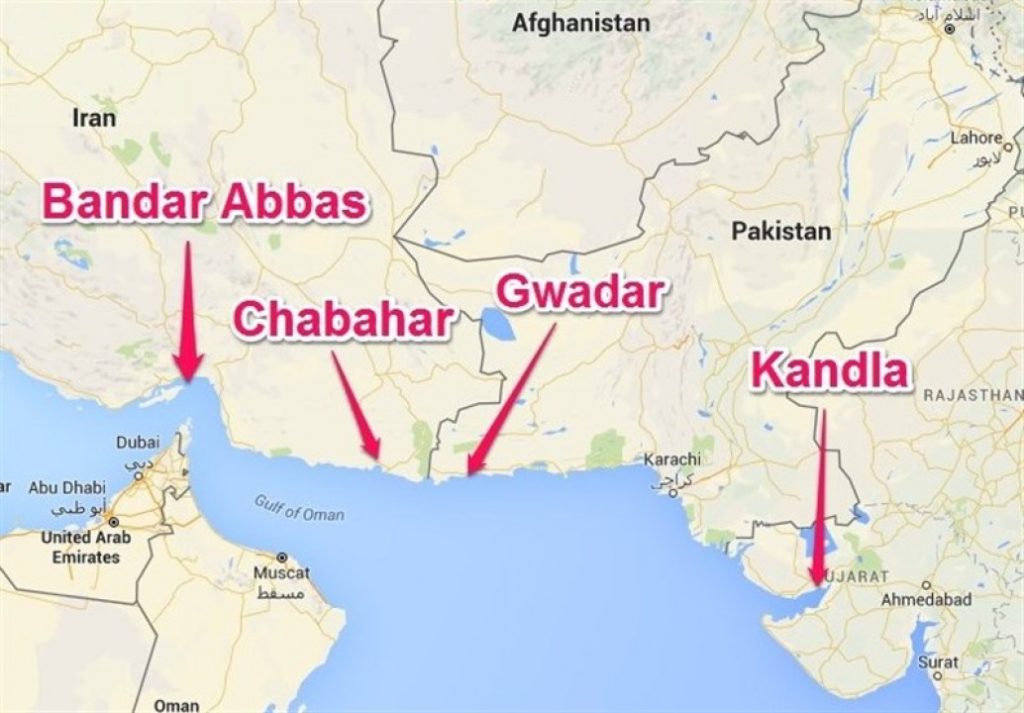
Chabahar Port, Iran’s only oceanic port, has long been caught between political narratives and economic realities. While this port had the potential to become one of the major hubs of international shipping and transportation in the region, delays in decision-making and the absence of a unified strategy have pushed it away from its development path.
According to official statistics, India has fulfilled only 20 million USD of its 85 million USD investment commitment in Chabahar. In contrast, China has invested more than 54 billion USD in Gwadar Port, Pakistan’s rival port. This comparison clearly shows that Chabahar’s main challenge is not sanctions, but rather poor partner selection and weak policymaking in the field of international shipping services.
Chabahar: A Missed Opportunity in the International Transport Network
Thanks to its exceptional geopolitical location, Chabahar has the capacity to become a key hub for shipping goods to regional and international ports. The port could have played a strategic role in multimodal transportation by sea and land, connecting Iran to a secure transit corridor linking Central Asia, the Indian subcontinent, and Europe.
However, experts believe that the lack of a clear strategy and reliance on unfulfilled promises caused Chabahar to fall behind in regional competition.
Fragmented Policymaking: A Barrier to the Development of Shipping Services
Dr. Mohammad Moonsan, faculty member at Shahrood University of Technology and board member of the Iranian Marine Engineering Society, believes that Chabahar’s development path was flawed from the beginning. According to him, Iran’s long-term interests have never aligned with those of India and the United States, and reliance on these countries left Chabahar in a state of uncertainty.
During the period in which Iran was waiting for India’s investment to materialize, India joined alternative projects such as the Port of Haifa and the India–Middle East–Europe Corridor, effectively marginalizing Chabahar.
Gwadar: A Successful Model of International Transport and Logistics Development
In contrast, China—through precise planning under the Belt and Road Initiative—has transformed Gwadar Port into one of the region’s major hubs for international transportation and maritime logistics.
China’s investment in Gwadar includes:
- Construction of highways and railway lines
- Development of an international airport and a 300-MW power plant
- Expansion of container and oil terminals
By 2030, these projects are expected to create millions of jobs and significantly strengthen Gwadar’s role in shipping goods to international ports, while Chabahar’s operational capacity remains limited.
Reviving Chabahar: Regional Convergence Instead of Competition
Experts in international shipping and transportation believe that reviving Chabahar lies not in competing with Gwadar, but in regional convergence. Infrastructure connectivity between Chabahar and Gwadar through road and rail networks could create a secure and cost-effective transit corridor for regional trade.
Such an approach would increase Iran’s share of the transit market and provide a solid foundation for expanding sea-land multimodal transport and boosting national logistics revenues.
Transparent Contracts: A Key Requirement for Success in International Shipping
The Gwadar experience shows that the main issue in cooperation with foreign partners is not nationality, but the absence of transparent, time-bound contracts with clear enforcement mechanisms. By reforming contractual structures, Iran can effectively leverage foreign investment to achieve sustainable development in international shipping services.
The Role of Opsshipping in the Future of International Transportation
By focusing on professional services in international shipping and transportation, multimodal sea-land cargo transport, and shipping goods to ports worldwide, Opsshipping can play an effective role in activating Iran’s transit potential.
Relying on realistic analysis, proper partner selection, and the execution of transparent contracts is the development path that Opsshipping follows in delivering international logistics services.
Conclusion
Chabahar still has the potential to become a major player in the regional transit network—but only if decision-making moves beyond narratives and aligns with investment realities. The future of this port is directly tied to today’s choices in the field of international shipping and transportation.