


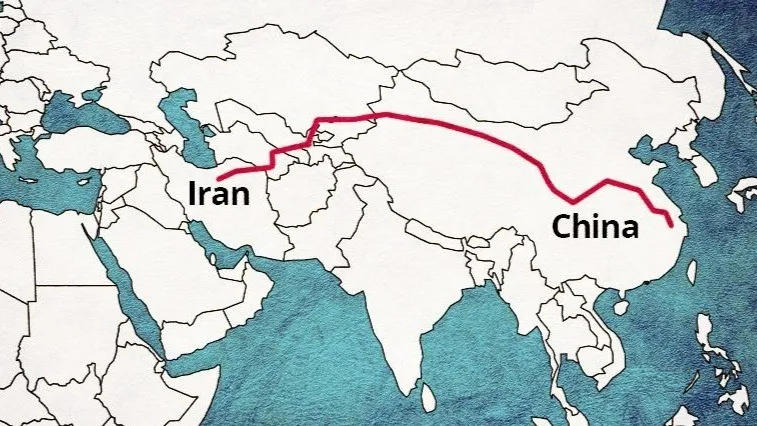
When businesses plan to import goods from China, sea freight is usually the first transportation method that comes to mind. However, land freight has become an increasingly attractive alternative for many importers due to improvements in international logistics corridors, railway networks, and cross-border transportation infrastructure.
Today, cargo can travel from China to Iran through several international transit corridors using road transport, rail freight, or a combination of both. Depending on the shipment type, delivery schedule, and destination, land transportation can provide an excellent balance between shipping cost and transit time.
Choosing the right transportation method is not simply about selecting the fastest or cheapest option. Importers should evaluate supplier location, cargo volume, customs procedures, and overall supply chain efficiency before making a decision.
Before deciding whether land freight is the right option for your shipment, we recommend reading our Complete Guide to Shipping Methods from China to Iran, where we compare sea freight, land transportation, air freight, and multimodal shipping solutions.
How Does Land Freight from China to Iran Work?
Contrary to what many people believe, land freight does not always mean moving cargo entirely by truck.
Modern logistics companies typically combine road transportation and railway services to create faster, more efficient shipping solutions. This multimodal approach allows cargo to move through several countries before reaching Iran while reducing unnecessary delays and optimizing transportation costs.
After the goods are collected from the supplier’s factory or warehouse, they are transported to an inland logistics hub or railway terminal. From there, the shipment continues through Central Asian transit corridors before entering Iran.
Because several transportation modes can be combined during the journey, businesses gain greater flexibility when selecting the most suitable shipping solution for their cargo.
Main China to Iran Land Routes
There is no single land route connecting China and Iran. Instead, international freight forwarders choose from several established trade corridors depending on border conditions, cargo requirements, and transportation availability.
Over the past decade, China’s Belt and Road Initiative (BRI) has significantly expanded land transportation networks across Asia, creating faster and more reliable freight connections between East Asia and the Middle East.
Some of the most frequently used transit routes include:
- China → Kazakhstan → Turkmenistan → Iran
- China → Kazakhstan → Uzbekistan → Turkmenistan → Iran
- China → Kyrgyzstan → Uzbekistan → Turkmenistan → Iran
Depending on the shipment, logistics companies may also combine rail freight with road transportation to optimize both transit time and shipping costs.
The best route is usually determined by factors such as the supplier’s location, cargo type, customs regulations, and the current conditions along each international corridor.

Road Freight or Rail Freight: Which Is Better?
One of the most common questions importers ask is whether road transportation or rail freight is the better choice.
The answer depends entirely on the shipment itself. Each transportation method has unique advantages and limitations, making it important to evaluate the cargo requirements before selecting a shipping solution.
Road Freight
Road transportation offers greater flexibility and can often provide direct delivery between logistics hubs. It is particularly useful for medium-sized shipments that require adaptable routing.
Key advantages include:
- Flexible transportation routes
- Easier scheduling
- Suitable for medium-volume cargo
- Good integration with multimodal transport
However, delivery times may vary depending on road conditions, border crossings, and customs inspections.
Rail Freight
Rail transportation has become one of the fastest-growing logistics solutions connecting China with Central Asia and the Middle East.
Modern freight trains offer reliable schedules, large cargo capacity, and reduced dependence on highway traffic, making rail an excellent choice for industrial goods and containerized shipments.
Major benefits include:
- High cargo capacity
- Reliable departure schedules
- Lower environmental impact
- Suitable for container transportation
- Efficient long-distance logistics
Today, many international freight forwarders combine rail and truck transportation to achieve the best balance between speed, flexibility, and cost.
Transit Time from China to Iran by Land
One of the main reasons businesses choose land freight is its shorter transit time compared with many sea freight services.
In most cases, cargo transported via road, rail, or multimodal routes reaches Iran within 15 to 25 days. However, the exact delivery time depends on several factors, including the supplier’s location, the selected transit corridor, customs clearance procedures, border conditions, and the transportation mode.
Seasonal demand, public holidays, and geopolitical developments along transit routes may also affect delivery schedules.
Want to compare transit times for sea, land, and air freight? Read our article Shipping Time from China to Iran to understand which transportation method best fits your business needs.
What Affects Land Freight Costs?
Unlike domestic transportation, international land freight costs are influenced by much more than distance.
The final shipping price depends on a combination of logistics, customs, and operational factors. Understanding these variables helps importers estimate transportation expenses more accurately and avoid unexpected charges.
The main cost factors include:
- Pickup location in China
- Final delivery destination in Iran
- Cargo weight and dimensions
- Type of goods
- Transportation mode (road, rail, or multimodal)
- Border crossing and transit fees
- Customs procedures
- Fuel prices and seasonal market conditions
Rather than focusing only on the freight rate, businesses should evaluate the total landed cost of importing goods.
Advantages of Land Freight from China to Iran
Land transportation has become an increasingly attractive option for companies looking for a balance between delivery speed and transportation costs.
Compared with many traditional shipping routes, land freight offers faster delivery while remaining significantly more affordable than air freight.
Some of its main advantages include:
- Faster transit than many sea freight routes
- More predictable delivery schedules
- Flexible multimodal transportation options
- Suitable for medium-sized commercial shipments
- Efficient access to inland manufacturing regions in China
- Better supply chain flexibility
For businesses importing time-sensitive products, land freight can improve inventory management and reduce waiting periods.
Limitations of Land Freight
Although land transportation offers many benefits, it is not always the ideal solution for every shipment.
Because cargo travels through several countries, transportation is affected by international transit regulations, customs procedures, and border operations. Delays at one border crossing may impact the entire delivery schedule.
Other limitations include:
- Dependence on international transit corridors
- Possible customs delays
- Higher costs for certain cargo types
- Limited suitability for oversized shipments
- Lower capacity than ocean freight
For high-volume container shipments, sea freight often remains the most economical transportation option.

Land Freight vs. Sea Freight
Many importers wonder whether land transportation or sea freight is the better choice.
The answer depends on business priorities rather than a single “best” shipping method.
If minimizing transportation costs is your primary objective, sea freight is generally more economical for full-container and high-volume shipments.
However, if faster delivery is essential and air freight exceeds your budget, land transportation can provide an effective alternative.
| Comparison | Land Freight | Sea Freight |
|---|---|---|
| Transit Time | Faster | Slower |
| Shipping Cost | Moderate | More economical for large shipments |
| Cargo Capacity | Medium | Very High |
| Best For | Time-sensitive cargo | Large commercial shipments |
| Route Flexibility | High | Limited to shipping schedules |
What Types of Goods Are Suitable for Land Freight?
Land transportation is especially suitable for commercial cargo that requires quicker delivery than sea freight while remaining more cost-effective than air transportation.
Common examples include:
- Industrial equipment
- Machinery components
- Electronic products
- Network equipment
- Automotive spare parts
- Manufacturing materials
- Medium-volume commercial cargo
Selecting the right transportation method should always be based on shipment size, delivery deadline, cargo value, and supply chain requirements.
Common Mistakes Importers Make
Many transportation delays and unnecessary expenses occur long before cargo leaves China.
Some of the most common mistakes include:
- Choosing transportation based only on the lowest freight rate
- Ignoring border transit conditions
- Underestimating customs documentation requirements
- Selecting the wrong transportation method
- Working with inexperienced freight forwarders
Proper logistics planning and cooperation with an experienced international shipping company can significantly reduce transportation risks and improve supply chain efficiency.
FAQ
Yes. Land freight between China and Iran is widely used through international transit corridors across Central Asia. Depending on the shipment, transportation may be completed by road, rail, or a combination of both.
In most cases, land freight takes 15 to 25 days. The exact transit time depends on the supplier’s location, the chosen route, customs procedures, border conditions, and the transportation method.
Not always.
For large container shipments, sea freight is generally the most economical option. However, when faster delivery is required without paying the high cost of air freight, land transportation often provides a better balance between cost and speed.
Land transportation is commonly used for industrial equipment, machinery parts, electronics, automotive components, manufacturing materials, and medium-sized commercial shipments that require relatively fast delivery.
Several international transit corridors are available. Depending on the logistics plan, shipments may pass through countries such as Kazakhstan, Uzbekistan, Kyrgyzstan, and Turkmenistan before entering Iran.
Conclusion
The China to Iran land route has become an important transportation option for businesses seeking a balance between delivery speed and shipping costs.
Thanks to the continuous development of international logistics corridors and railway infrastructure, land freight now offers a reliable alternative to traditional sea transportation for many commercial shipments.
However, choosing the right shipping method should never be based solely on transit time or freight rates. Importers should evaluate supplier location, cargo characteristics, customs requirements, transportation costs, and delivery deadlines before making a final decision.
By working with an experienced freight forwarder and selecting the most appropriate transportation strategy, businesses can reduce logistics risks, improve supply chain efficiency, and optimize their overall import costs.
Why Choose Opsshipping?
Opsshipping provides professional international logistics solutions, including sea freight, import, export, transit services, multimodal transportation, and Door-to-Door shipping across major trade routes connecting China, Dubai, Turkey, India, Russia, and Iran.
Our logistics specialists help businesses select the most suitable transportation method based on cargo type, delivery schedule, budget, and supply chain requirements.
Whether you need sea freight, land transportation, or a multimodal shipping solution, our team is ready to help you move your cargo safely and efficiently.